
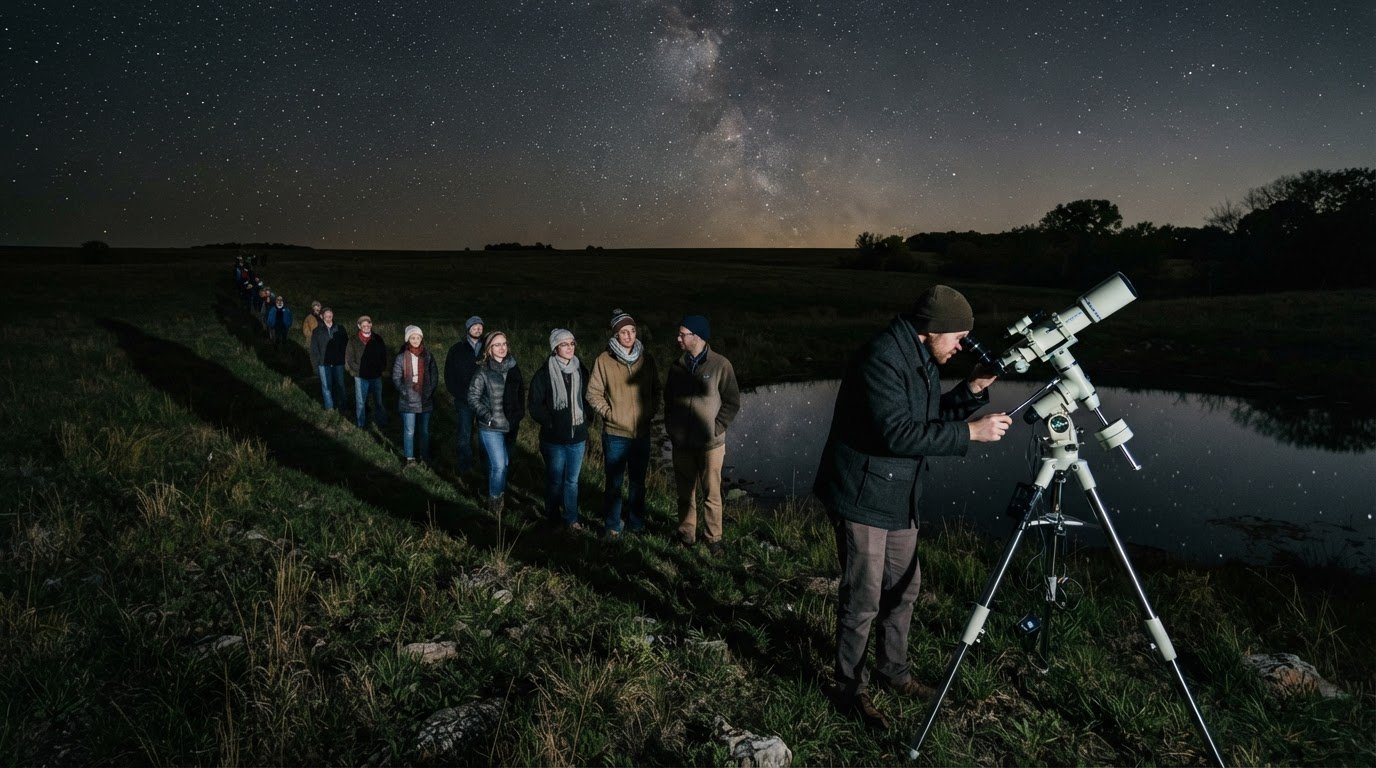
What if the best retreat alternative isn’t another conference room, but a setting that helps your team think differently? The most useful unique group retreat alternatives match the gathering’s purpose, whether that means focused planning, shared activities, or time away from familiar routines.
Choosing a venue can be challenging when the group needs to make decisions, connect, and recharge. Start with the retreat’s main goal, then consider group size, schedule, location, and atmosphere. A multi-night team gathering needs a different rhythm from a short planning session, and a corporate retreat may call for a different balance of structure and free time.
This guide explores ways to shape a retreat around your planning needs, from active outdoor experiences to quieter settings beneath the night sky. You’ll find practical considerations for a three-night gathering and ideas for deciding whether a stargazing retreat is the right fit for your group.
Key Takeaways
- Choose a retreat setting around the gathering’s purpose, preferred atmosphere, and the time available.
- For a three-night team retreat, plan the schedule, location, facilitator, and ground rules together.
- Balance structured activities with open time, choosing options that suit the group and its goals.
- Assess retreat costs by considering what the stay includes and which features matter most to your group.
1. Choosing an alternative by planning needs
Start with the intended outcome: a decision, stronger relationships, reflection, or shared discovery. Then choose a setting and activities that support it. A planning retreat may need quiet spaces and structured sessions, while a community gathering may benefit from outdoor time and shared activities. When comparing unique group retreat alternatives, prioritize the purpose before the scenery.
Group size changes the experience. A Colorado church women’s ministry drew 250 to 300 women to its annual retreats, while a one-day event with author Stasi Eldredge reached 800 women. These examples show why a large gathering may need a different format from a small team discussion. For close conversation, choose a setting that supports smaller circles; for a broader program, plan clear transitions between sessions.
Accessibility, dietary needs, and safety should shape the venue and schedule from the outset. Consider step-free routes, accessible restrooms, seating, food allergies, dietary preferences, emergency procedures, and the physical demands of activities. Include these needs in the plan rather than treating them as last-minute details.
Match the retreat’s pace to its purpose. A meditation retreat often calls for stillness and uninterrupted time, while an active gathering can include outdoor walks or collaborative challenges. Vipassana retreats often last seven to 10 days, so a shorter program should set realistic expectations and avoid crowding every moment with activities.
Use a straightforward planning sequence: define the desired outcome, estimate attendance, set the available time, and select a format. A group seeking reflection might choose guided practices and quiet evenings; colleagues seeking connection might combine facilitated discussion with informal outdoor time. Leave room for conversation between scheduled sessions.
Finally, decide what the group should take home: an agreed plan, stronger connections, or a memorable shared experience. That answer helps determine the retreat’s duration, level of structure, and setting, so activities support the goal rather than distract from it.
3. Planning a three-night retreat for a 40-person team
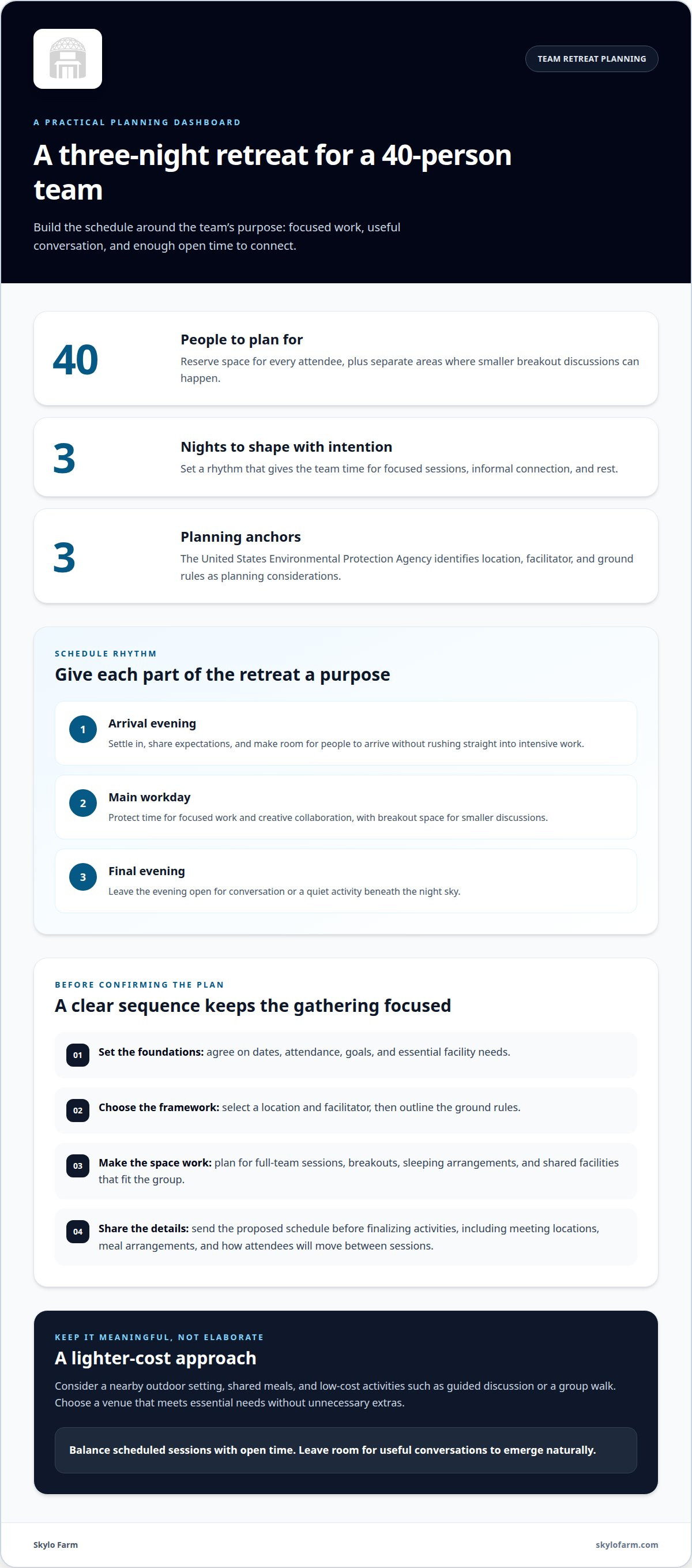
For a 40-person team, start with the retreat’s purpose and a three-night schedule. Decide which sessions need focused work, which need open discussion, and where nature or informal time can build connection. The United States Environmental Protection Agency identifies location, facilitator, and ground rules as planning considerations. Agree on these early, then shape events around the outcomes the team wants.
Reserve space for all 40 attendees, plus separate areas for breakout discussions. A single room may suit a full-team presentation, but smaller groups need room to work without competing for space. Match sleeping arrangements and shared facilities to the actual group size. Alternative retreat venues accommodate different numbers, so capacity depends on available lodging and gathering spaces.
To plan a unique group retreat, first set the dates, attendance, goals, and essential facility needs. Then select a location and facilitator, outline ground rules, and reserve suitable space for full-group sessions and breakouts. Share the proposed schedule with attendees before finalizing activities.
For an affordable weekend retreat, consider a nearby outdoor setting, shared meals, and low-cost activities such as guided discussion or a group walk. Keep the schedule focused and choose a venue that meets essential needs without unnecessary extras. A balance of structured sessions and unplanned conversation can make the gathering meaningful without an elaborate program.
Give each evening a purpose. Use the arrival evening to settle in and share expectations, then reserve the main day for focused work and creative collaboration. Leave the final evening open for conversation or a quiet activity beneath the night sky. This rhythm can encourage new perspectives while leaving energy for the work ahead.
Before the team arrives, distribute the agenda, facilitator’s role, and agreed ground rules. Include practical details such as meeting locations, meal arrangements, and the plan for moving between sessions. A clear framework lets the 40-person group use its time intentionally, while flexibility leaves room for useful conversations that emerge naturally.
3. What group retreat activities work for teams, friends, or families?
Choose activities that give the gathering a shared purpose, then adapt them to the group. A company team might start with a workshop on stress management, nutrition, or self-care. Friends could use guided conversation prompts to share experiences, while families might collaborate on a simple cooking project. Each option gives people a reason to participate without requiring everyone to take part in the same way.
Outdoor activities add movement and a change of perspective. Hiking, beach walks, climbing, rafting, and sailing can support team building, depending on the setting and group interests. For a group with varied abilities, offer a relaxed walk alongside a more demanding activity. Participants then have a meaningful choice, and the shared experience does not depend on everyone having the same pace or skill level.
Service projects can connect a retreat with its surrounding community. A group might support a local school or build bicycles for children who need them. Set a clear shared goal, explain each person’s role, and leave time to reflect afterward. Teams can discuss how they worked together; friends and families can consider what they learned by contributing side by side.
Balance scheduled sessions with unstructured time. Follow a morning workshop with an open afternoon, for example, then gather for a meal or evening conversation. This gives colleagues room to continue a useful discussion, while friends and families can enjoy spontaneous moments. A retreat feels more cohesive when each event has a purpose and participants have space to recharge.
Before finalizing the program, match each activity to the group’s goals, setting, and energy. A team seeking collaboration may benefit from a shared challenge, while a group looking to unwind might prefer a gentle walk and a self-care session. Combining a facilitated activity with informal time can keep the schedule engaging without turning every moment into an assignment.
4. How much do alternative group retreats cost per person?
There is no single per-person cost that applies to every retreat. A weekend in a simple shared setting differs from a multi-night stay with private rooms, meals, guided activities, and dedicated meeting space. Compare the full trip, not just the nightly lodging rate, so the budget reflects what participants will use.
For a clear estimate, list the expected expenses: lodging, meals, meeting facilities, activities, facilitator fees, transportation, and supplies. Add the costs, then divide the total by the number of attendees. If some participants need private rooms, for example, that choice changes the lodging share even if other expenses stay the same.
Group size affects the budget in several ways. A larger team may spread fixed costs, such as a facilitator or meeting room, across more people. However, the venue still needs suitable rooms and space for everyone. A smaller group may have fewer shared expenses but less opportunity to spread fixed costs.
A retreat’s overall cost depends on factors such as group size, stay length, lodging, and requested activities. A planning team should distinguish essential expenses from optional additions. For example, consider whether a guided workshop supports the retreat’s purpose before including it in the per-person estimate.
Compare options using the same assumptions: attendance, number of nights, meal plan, transportation, and activity schedule. Record what each total includes, then calculate the per-person share based on expected attendance. This makes the trade-offs clear and avoids making an option with fewer included features seem less costly by default.
Set a spending limit before choosing extras. Allow for changes in attendance or travel needs, and make the final estimate easy to understand. A transparent breakdown helps participants see how the setting, schedule, and activities shape the retreat’s overall cost.
Skylo Farm
Skylo Farm is an early-stage project planned as a distinctive setting for groups seeking a retreat shaped by stargazing and wide-open rural landscapes. It is designed as a circle of 10 grain silo homes with geodesic dome roofs for stargazing. The project is not yet open, but may suit a future gathering where the setting itself helps create a memorable shared experience.
Skylo Farm is scheduled to open in 2027. Its owners are experienced, top Airbnb hosts with a 4.98/5 guest rating, and they’re excited to bring their hospitality experience to this new venture. For teams, friends, or families considering a future retreat, Skylo Farm offers a trusted brand centered on time together beneath the night sky as they expand their unique group retreat alternatives.
Contact Skylo Farm by email or phone to discuss the retreat and your plans.
Give the gathering a lasting direction
A retreat can shape more than the time spent together. As you weigh unique group retreat alternatives, look for an option that gives your group a shared focus beyond the agenda. A distinctive setting can open up different conversations, but the purpose should remain yours: decide what you want participants to carry into the weeks ahead.
Before settling on a plan, picture the moment you hope people remember: a decision reached with clarity, a conversation that continued after a session, or a quiet pause beneath an open sky. Let that intention guide your choices, and the retreat can feel cohesive without asking every hour to deliver a result.
If a stargazing retreat feels aligned with your gathering, take the next step by discussing your plans with Skylo Farm. Contact Skylo Farm about your retreat, and begin shaping an experience with room for connection and discovery.
Frequently Asked Questions
Can’t find the perfect retreat?
Adjust the criteria before abandoning the idea. Separate essentials, such as accessible lodging or quiet work areas, from preferences like a particular activity or décor. Then identify one priority the current options don’t meet and redesign around it. If formal schedules feel restrictive, for example, shape the gathering around a shared experience with optional activities and unstructured time. This can reveal a format that better suits your group.
What are unique alternatives to a traditional group retreat?
Consider a stargazing stay, a community service gathering, or a retreat built around a shared creative project. At Skylo Farm, groups can stay in luxury grain-silo homes with private observatories and telescopes, making the night sky a focal point of the experience. It’s a distinctive option for groups looking beyond conventional meeting sessions. Other alternatives can center on making something together or contributing to a community cause.
What group size and facilities do alternative retreat venues accommodate?
Capacity depends on a venue’s lodging and gathering spaces. Choose a setting that can accommodate the whole group and provide private space for focused sessions, breakout discussions, and collaboration.