
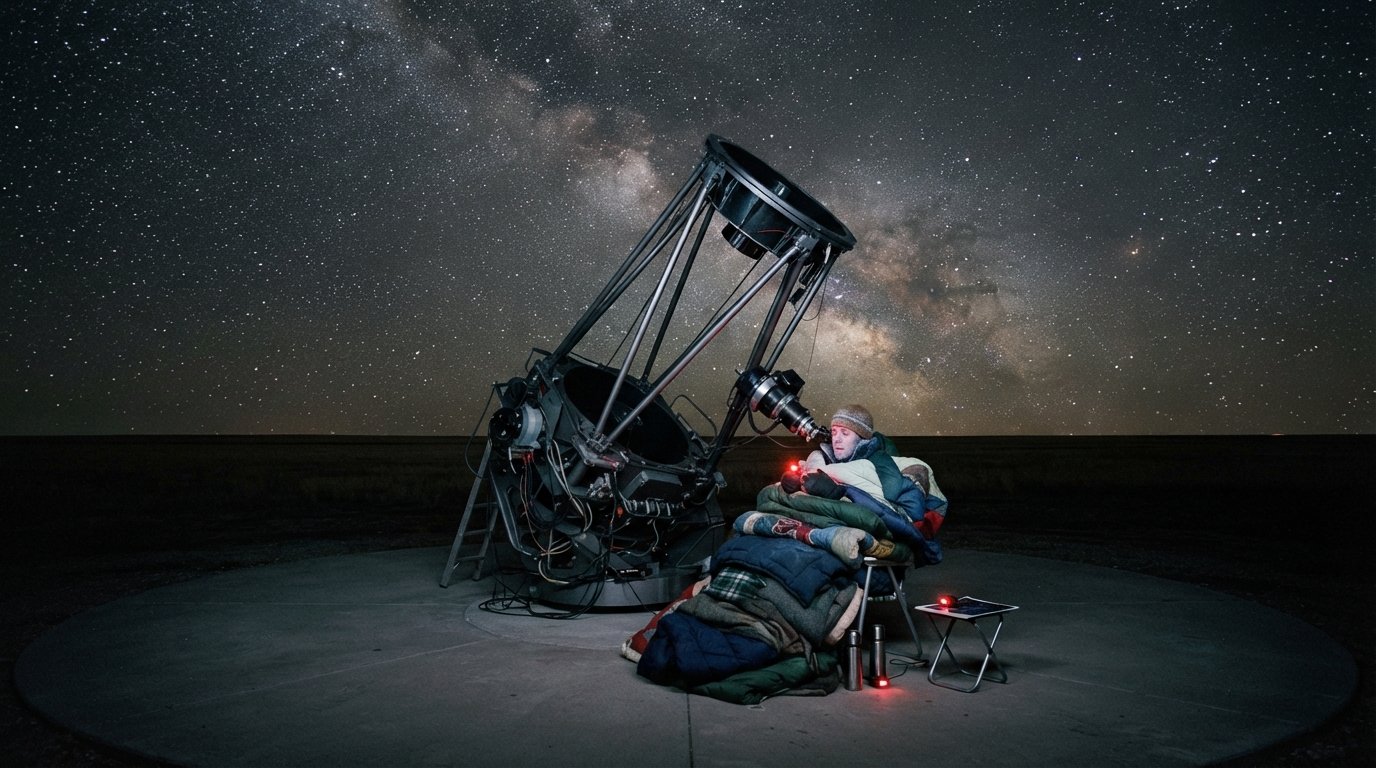
Don’t get stuck outside in the cold with your stargazing. What makes a stargazing retreat in north america worth planning: the promise of a remarkable sky, or the care put into the whole stay? Listings can make it hard to tell a genuine night-sky experience from evocative imagery. Viewing conditions vary, and the right equipment or guidance can shape how much you see and learn.
A memorable retreat brings sky access, comfortable accommodation, and thoughtful hosting together without promising stars on demand. This guide explains how to assess viewing conditions, choose stargazing amenities, and recognize a well-considered stay. Skylo Farm is planned as a circle of 10 repurposed grain-silo homes with geodesic dome roofs, surrounded by farmland. The retreat is expected to open in 2027. Its owners are experienced, top Airbnb Hosts with a 4.98/5 guest rating, and can be reached by email or phone. Use the criteria below to weigh the experience as well as the place you’ll stay.
Key Takeaways
- Choose a stargazing retreat in north america by comparing its viewing setting, accommodation design, observing support, and host transparency.
- Consider light pollution, moon phase, and the forecast when setting expectations. Cloud cover and moonlight can affect what’s visible.
- Compare sleeping spaces, privacy, outdoor amenities, and telescope support, not just the view.
- Skylo Farm’s planned silo homes bring lodging and stargazing together. The retreat is expected to open in 2027.
What Makes a Stargazing Retreat in North America Worth Choosing?
An ordinary overnight stay gives you a place to sleep. A stargazing retreat makes observing the night sky a central part of the experience through its setting, design, or viewing support. When comparing a stargazing retreat in north america, look beyond striking photographs and weigh four connected elements:
- Viewing setting: Consider the surroundings and nearby sources of artificial light. A destination label can’t predict what you’ll see on a particular night.
- Accommodation design: Check whether the layout makes it comfortable to step outside and spend time observing.
- Observing support: Find out whether equipment and guidance can help you explore the sky.
- Host transparency: Look for clear details about the accommodation and what depends on nature.
Does the night sky shape the stay?
Look for signs that observing is part of the property’s design, rather than an activity guests must plan entirely on their own. A well-considered nighttime experience gives guests a place to observe and practical support for getting oriented under the sky. The difference is intentionality: the accommodation and the experience are designed with the night in mind.
For more criteria to use when comparing places to stay, explore this astronomy vacation rental guide.
What does a retreat comparison leave out?
A dark-sky label can provide useful context about a destination’s approach to protecting the night sky, but it doesn’t guarantee what you’ll see from a particular property on a particular evening. A Dark-sky preserve, for example, is a designation associated with protecting dark skies. Treat labels as one point of comparison alongside the setting, lodging, and viewing support.
Separate features a property can provide, such as its layout and observing amenities, from conditions it can’t control. Clouds, for instance, can obscure the sky. A useful comparison considers the whole stay while allowing for nature to shape the view.
How to Assess Stargazing Conditions Before You Choose a Retreat
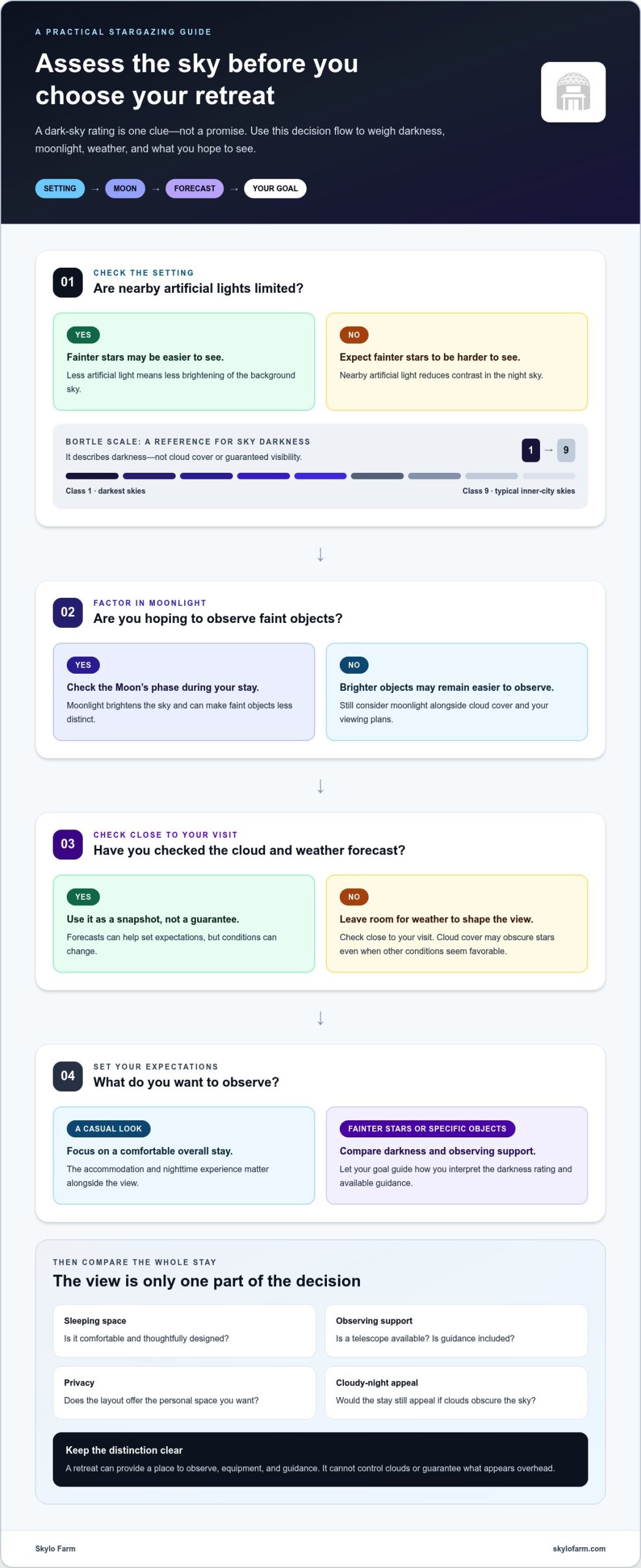
Separate the conditions you can plan around from those nature decides. You can compare darkness, moon phase, and forecast, but you can’t control clouds or guarantee what will appear overhead. Use these steps to assess a stargazing retreat in north america without treating a sky rating as a promise.
- Consider light pollution. Nearby artificial light can make fainter stars harder to see. The National Park Service explains the Adverse effects of light pollution, including its impact on night skies. A Bortle rating offers a common reference for sky darkness. The scale runs from Class 1, the darkest skies, to Class 9, typical inner-city skies. It describes darkness, not cloud cover or guaranteed visibility.
- Think about the Moon. Moonlight brightens the sky and can make faint objects less distinct, while brighter objects may remain easier to observe. If you have specific sights in mind, consider how the Moon’s phase during your stay may affect viewing.
- Check the forecast close to your visit. Cloud and weather forecasts can help you set expectations, but they aren’t certain. Cloud cover may obscure stars even when other conditions seem favorable.
- Define your observing goal. A casual look at the sky calls for different expectations than seeking fainter stars or specific celestial objects. Let your goal guide how you interpret darkness ratings and viewing support.
How do light pollution and moonlight affect the view?
Artificial light brightens the background sky, reducing contrast and making fainter stars less visible. Moonlight can have a similar effect, so the phase matters if you’re interested in subtle details. Neither factor tells the whole story. Consider both alongside cloud cover and what you hope to observe.
What can a forecast tell you about a stargazing stay?
A forecast gives you a useful snapshot, not a guarantee. Check it close to your visit and leave room for changing conditions. A retreat can support observing, but it can’t control the sky. To see how these priorities inform an upcoming stay, explore Skylo Farm’s stargazing retreat plans.
Which Stargazing Retreat Details Matter Beyond the View?
A night under the stars is only one part of a stay. Compare the sleeping space, privacy, outdoor amenities, and observing support separately, then consider how they work together. A distinctive room can make a visit memorable even if clouds interrupt viewing. A telescope alone, meanwhile, doesn’t tell you whether the overall experience suits your needs.
Use this framework to compare a stargazing retreat in north america:
- Accommodation: Is the sleeping space comfortable and thoughtfully designed?
- Observing support: Is a telescope available, and does the experience include guidance?
- Privacy: Does the layout offer the amount of personal space you want?
- Weather-dependent viewing: Would the stay still appeal if clouds obscure the sky?
Dark-sky designations can add context to your research. DarkSky International’s International Dark Sky Places list can help you explore recognized locations, but a designation doesn’t establish what conditions will be like at a particular lodging on a particular night.
What should beginner stargazers look for?
A telescope can bring distant objects into view, but using one may take some learning. Guided support plays a different role: it helps guests get oriented and understand what they’re observing. If you’re new to astronomy, look for an experience that welcomes beginners instead of assuming you already know how to set up equipment or identify objects.
How can a stay remain memorable when viewing conditions change?
Clouds can change the night’s plans, so compare the complete accommodation experience rather than relying on a clear-sky promise. Consider whether the sleeping space, privacy, and outdoor amenities appeal to you independently of the view. These are useful qualities to weigh alongside stargazing.
Skylo Farm is being developed around a stargazing stay. Explore Skylo Farm’s planned retreat to see how accommodation and observing support come together in its design.
Why Skylo Farm Is a Distinctive Upcoming Stargazing Retreat
Skylo Farm is an upcoming retreat built around a distinctive architectural idea: repurposed grain-silo homes with geodesic dome roofs, set amid farmland. The design gives familiar agricultural structures a new relationship with the night sky. It’s a distinctive lodging concept, not a promise of clear skies or a particular view.
How does Skylo Farm bring a different form to stargazing lodging?
The circle of 10 silo homes gives the retreat a recognizable form, while the geodesic dome roofs connect the design to celestial observation. Together, they make the accommodation concept part of the stargazing experience rather than a conventional overnight stay. Private outdoor amenities add another dimension to the planned experience, with space to enjoy the surroundings as well as the sky.
Skylo Farm’s planned stay includes guided telescopes for observing. This support can make telescope viewing more approachable, though the weather and other viewing conditions remain beyond the property’s control.
What can travelers know about Skylo Farm now?
Skylo Farm is in its early stages and is expected to open in 2027. It is a future retreat, not a place currently hosting guests. Its planned design and focus are clear: silo homes, dome roofs, private outdoor amenities, and guided telescope use, all centered on stargazing.
For anyone comparing a stargazing retreat in north america, it’s useful to distinguish a future project from an operating stay. Skylo Farm’s planned combination of repurposed silo homes, geodesic dome roofs, private outdoor amenities, and guided telescope use offers a distinctive vision for a retreat shaped around the night sky, with nature setting the viewing conditions.
Make Room for Your Next Night Under the Stars
Let your priorities guide your search. Decide whether you’re drawn to learning your way around the sky, enjoying a distinctive place to stay, or simply making time to look up. That intention can help you choose a stargazing retreat in north america that feels meaningful even when the night unfolds differently than expected.
Skylo Farm is a developing vision for a stay shaped around celestial observation and considered design. Its owners are experienced, top Airbnb Hosts with a 4.98/5 guest rating, and they can be reached by email or phone. The retreat is expected to open in 2027.
Discover the upcoming Skylo Farm stargazing retreat and follow the project as it develops. Let curiosity lead, and give your next journey a little more room for wonder.
Frequently Asked Questions
What is a stargazing retreat?
A stargazing retreat in north america is a stay planned around making time to observe the night sky. That focus may appear in the setting, accommodation, available equipment, or guidance for guests. Compare whether a property has a place to observe and support for using a telescope. The term alone doesn’t tell you what the sky will be like during your visit.
Can you stargaze without a telescope?
Yes. You can enjoy the night sky without a telescope. Start with unaided viewing and try picking out familiar constellations. Binoculars may also help with some observations. A telescope can reveal more detail, but it isn’t essential for a rewarding first look. If you’re new to observing, choose one or two things you’re curious about rather than feeling you need to identify everything overhead.
What happens if it is cloudy during a stargazing retreat?
Clouds may prevent you from seeing stars, so avoid building your entire trip around a single night of observing. Check the forecast as your visit approaches, then keep your plans flexible. You can still enjoy the accommodation and other features that matter to you, but don’t assume every property has indoor activities or alternative entertainment. A thoughtful trip plan leaves room for the sky to change.
When is the best time to see the Milky Way?
There isn’t one best time for every destination. Visibility depends on the season, the Moon’s brightness, local light pollution, and cloud cover. The Milky Way’s prominent portions aren’t equally visible throughout the year. Before choosing travel dates, consult a current astronomy calendar for the place you plan to visit. Treat a potential Milky Way view as a possibility, not a feature any stay can guarantee.
Is Skylo Farm open for guests in 2026?
No. Skylo Farm isn’t currently hosting guests, so it isn’t an operating option for a trip in 2026. It remains a project in development and is expected to open in 2027. Keep its upcoming status in mind as you explore the retreat’s plans and consider whether it may suit a future stargazing vacation.