
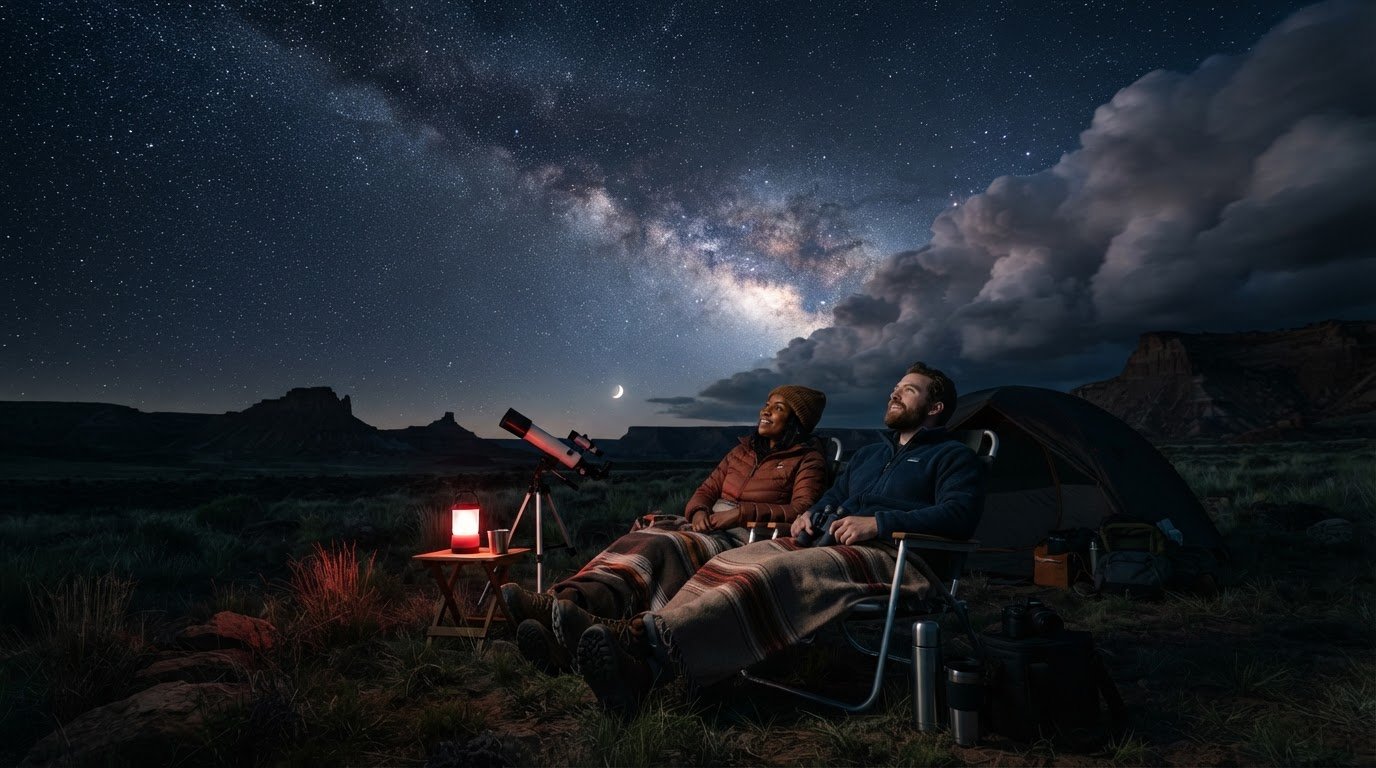
What makes a milky way viewing vacation successful? Plan around the Moon, the season, and the forecast, then leave room for the weather to change. A dark, clear night can reveal the Milky Way’s bright central band, but no destination or itinerary can guarantee a sighting. Choosing dates when the galactic core is visible and moonlight is limited gives you a better chance of a rewarding view.
If you’re unsure when the galactic core appears or whether a telescope is worth bringing, this guide will help you plan. You’ll learn how moonlight affects visibility, which 2027 dates offer promising evening views, and what to prepare for a comfortable night outdoors. You’ll also find out what to expect from a stay designed around stargazing. Skylo Farm is developing a circle of 10 grain silo homes with geodesic dome roofs, designed for stargazing and set among farmland. The project is scheduled to open in 2027. Its owners are experienced Airbnb hosts with a 4.98/5 guest rating, and they can be reached by email or phone. The sky remains unpredictable, but a good plan can make the most of a clear night.
Key Takeaways
- Plan a milky way viewing vacation around the possibility of seeing the night sky, not a guaranteed sighting.
- Choose your travel timing with the Milky Way’s changing seasonal visibility in mind.
- Use a pre-trip routine to review visibility, moonlight, and the forecast, then check conditions again close to departure.
- Skylo Farm is developing a stargazing stay in 10 geodesic dome-roofed grain silo homes, with opening planned for 2027.
What Makes a Milky Way Viewing Vacation Worth Planning?
A milky way viewing vacation is a trip planned around time and space for observing the night sky, not a promise that the galaxy will appear on cue. The Milky Way is our galaxy. From Earth, its bright central band can look like a pale, textured sweep across a sufficiently dark sky. Give yourself time to adjust to the darkness and look carefully. The Milky Way galaxy rewards more than a quick glance.
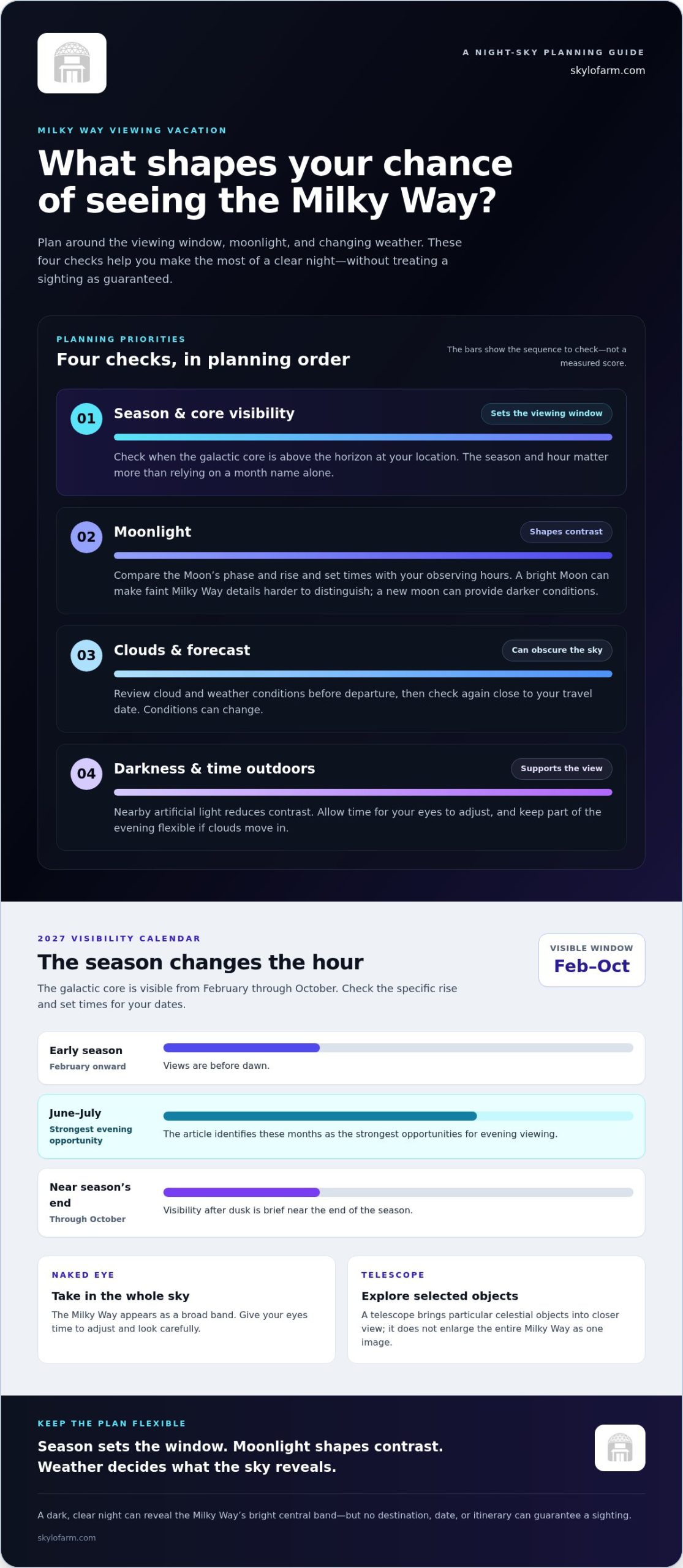
Several conditions affect what you can see. Nearby artificial light reduces contrast, a bright Moon makes faint details harder to distinguish, and clouds can obscure the sky. The season and hour also determine whether the galactic core is above the horizon. Clear, dark conditions improve Milky Way viewing, but no destination or travel plan can guarantee them.
What does a Milky Way viewing trip offer beyond ordinary stargazing?
A dedicated trip gives you time to settle outdoors, let your eyes adjust, and observe without rushing. The naked-eye view offers a broad sweep of light across the sky. A telescope gives you a different perspective, bringing selected celestial objects into closer view rather than enlarging the entire Milky Way as one image. The two experiences complement each other: start with the open sky, then turn to a telescope to explore particular objects.
Why does a dark sky matter?
Artificial light from roads, buildings, and outdoor fixtures brightens the sky and can wash out dim features. A dark-sky designation can help you identify places recognized for protecting night skies, but it does not guarantee clear weather or a particular view on your dates. Treat it as one planning factor. Also consider nearby lighting, expected cloud cover, lunar brightness, and whether the Milky Way will be visible during your planned observing hours. A darker setting can help, but sky conditions still change.
When Should You Plan a Milky Way Viewing Vacation?
The Milky Way’s most visible features are not available at the same time of night throughout the year. As Earth orbits the Sun, different parts of the galaxy become visible after dark, while the length of nighttime also changes with the season. Plan a milky way viewing vacation around both the viewing season and the hours when the galactic core is above the horizon, rather than relying on a month name alone.
In 2027, the galactic core is visible from February through October. Early-season views are before dawn, while near the end of the season visibility after dusk is brief. June and July offer the strongest opportunities for evening viewing. Use the calendar to narrow your options, then check the viewing times for your dates.
How does moonlight affect Milky Way visibility?
A bright Moon illuminates the sky, lowering contrast and making the Milky Way’s fainter details harder to distinguish. Compare the Moon phase with moonrise and moonset, then see how those times overlap with your planned observing hours. A new moon can provide darker conditions, but clouds and other changing sky conditions can still limit the view.
How can travelers check seasonal visibility?
Start with a current astronomy calendar for your travel year and intended viewing location. Look for the Milky Way’s visibility window, the galactic core’s rise and set times, and the lunar phase. Then compare those details with the hours you expect to be outdoors. The National Park Service’s stargazing tips offer additional guidance for planning an observing session.
Season sets the window, moon phase shapes the contrast, and weather decides what the sky reveals. Recheck the forecast as your trip approaches, since conditions can change. If you’re drawn to a stay designed around stargazing, explore Skylo Farm’s stargazing retreat plans.
How to Prepare for a Milky Way Viewing Vacation
Preparation makes a night outdoors feel less like guesswork and more like an invitation to look up. For a milky way viewing vacation, use this sequence to plan, then stay flexible. Clear skies and useful viewing conditions can change.
- Check visibility. Use a current astronomy calendar for your dates and intended viewing location to see when the Milky Way is above the horizon.
- Review the Moon. Compare its phase and rise and set times with the hours you hope to observe.
- Monitor the forecast. Check cloud and weather conditions before departure, then revisit them close to your travel date.
- Plan for time outdoors. Think about comfort and how you’ll spend a quiet stretch outside. Keep another part of the evening flexible in case clouds move in.
What should first-time stargazers prepare?
Keep your plan simple: know when and where you’ll observe, check current conditions, and allow time to adjust to the darkness. Make your outdoor arrangements comfortable enough for an unhurried session, and be ready to adapt if the sky changes. Patience matters. Even if clouds obscure the view you hoped for, time outdoors can still be enjoyable.
What can a telescope add to the experience?
Your eyes take in the Milky Way as a broad band across the sky, an expansive view that does not fit neatly into a telescope’s field. A telescope instead helps bring selected celestial features into closer view. Neither perspective replaces the other: begin with the open sky, then use a telescope to explore particular objects. A telescope can deepen observation, but it cannot promise a clear view.
When considering a stay, look for features that support time spent observing, not just evocative stargazing language. Skylo Farm is developing grain silo homes with geodesic dome roofs designed for stargazing. Explore the planned stargazing retreat and Skylo Farm’s stargazing plans as you consider a future stay shaped around the night sky.
How Skylo Farm Is Preparing for a Milky Way Viewing Stay
Skylo Farm is being developed for travelers who want the night sky to be part of their stay, not simply a view beyond it. The project brings together 10 grain silo homes and geodesic dome roofs, set among farmland. This distinctive design reflects the experience Skylo Farm is being created to support: spending time beneath an open sky.
Skylo Farm’s plans bring together silo-home architecture, geodesic domes, and guided telescopes for observing the night sky. Private outdoor amenities are also part of the planned guest experience. The retreat is scheduled to open in 2027, so these features describe the project in development rather than an operating stay.
What trust signals can travelers consider?
For a future hospitality project, clear communication and a well-defined vision matter. Skylo Farm’s owners are experienced Airbnb hosts with a 4.98/5 guest rating, and they are excited to be working on this new project. The owners can be reached by email or phone. Follow Skylo Farm’s updates to learn how the project develops and what the planned guest experience includes.
What is known about the Skylo Farm project?
The concept brings together agricultural forms, considered architecture, and stargazing. Its 10 grain silo homes will have geodesic dome roofs, and guided telescopes are part of the planned experience. Private outdoor amenities will add to the stay. Together, these elements are intended to make time beneath the night sky central to a visit.
For anyone imagining a future milky way viewing vacation, Skylo Farm is developing a stay centered on the night sky. Its silo-home architecture, geodesic domes, and planned guided telescopes give the project a clear stargazing focus, without promising what the weather will reveal. You can explore Skylo Farm’s developing retreat and follow the vision as it takes shape.
Make Room for the Night Sky
A memorable milky way viewing vacation begins with a change of pace: choose a window for observation, then leave room for the sky to surprise you. Treat the evening as an experience in its own right, not a test with a single result. If clouds gather or moonlight softens the view, the quiet of being outdoors beneath an expansive sky can still make the night worthwhile.
As you plan, consider what kind of setting helps you feel present after dark, from the architecture around you to the time you can spend looking upward. That intention can guide your travel planning without turning nature into a guarantee. Skylo Farm is developing a retreat around a thoughtful relationship with the night sky. For a closer look at the project and its progress, explore Skylo Farm and follow the project.
Bring curiosity, a flexible plan, and room to linger. Your next clear night may become more than a view; it can become a moment you carry home.
Frequently Asked Questions
Do I need a telescope to see the Milky Way?
No. Under a dark sky, you can see the Milky Way with your eyes as a broad band, without special equipment. A telescope offers another kind of observation, helping you examine selected celestial features rather than take in the whole sweep of the sky. Try looking unaided first, then use a telescope if you want to explore particular objects. Moonlight, clouds, and artificial light can all affect what’s visible.
Can I photograph the Milky Way with a smartphone?
Possibly. Some phones have night or long-exposure settings, but results depend on the device, how steady it is, darkness, and sky conditions. A phone image may look different from what your eyes experienced, and image processing can change its appearance. Treat a photograph as an optional experiment, not a scorecard for the night. If the result is dim or blurry, it doesn’t mean the experience outdoors was a failure.
How many nights should I plan for a Milky Way viewing vacation?
There’s no set number of nights that guarantees a sighting. A flexible itinerary with more than one possible observing opportunity can help you adapt if cloud cover affects one evening. To choose a stay length, weigh your travel time, the seasonal viewing window, and the forecast as your dates approach. Plan for the possibility that conditions won’t cooperate rather than relying on a single clear night.
What does DarkSky-approved lodging mean?
DarkSky International’s lodging program identifies accommodations recognized for dark-sky experiences and compliant lighting. It’s a specific designation, not a synonym for rural lodging or a property that promotes stargazing. Travelers can treat the recognition as one factor in planning, while remembering it doesn’t ensure clear skies on their dates. Moon phase, weather, timing, and the observing experience still matter for a trip.