
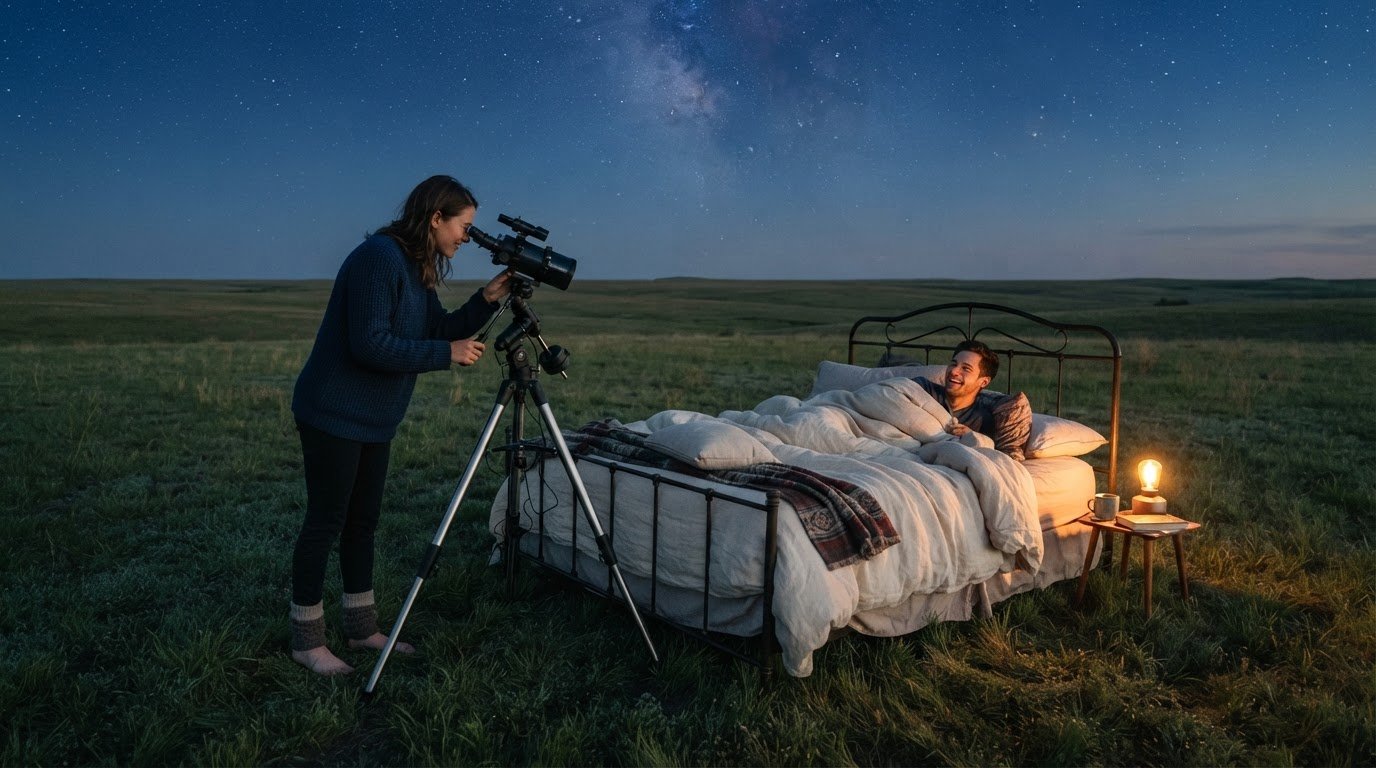
The right indoor outdoor vacation isn’t defined by how far you travel, but by the rhythm of the days: time under open skies balanced with comfortable places to rest. A Grand Canyon backpacking route spans four days and 29 miles, while Yellowstone’s Upper Geyser Basin cross-country ski route covers 2.5 miles. These U.S. examples show how outdoor experiences can vary in scale and pace.
When planning an Indoor Outdoor Vacation, weigh trip length alongside budget. Compare how much time you’ll have for the activities you care about, the pace you prefer, and the setting you want. Whether you’re spending active days outside or unwinding beneath a wide night sky, choose a trip that gives your priorities room.
Key Takeaways
- Compare tour durations and starting prices to see which experiences fit your available time and budget.
- Match your trip length to the pace you want, from a brief escape to a more unhurried journey.
- Explore U.S. destinations where outdoor discovery can pair naturally with indoor comfort.
- Consider how activities such as hiking, river trips, and stargazing can shape a more balanced vacation.
1. Tour durations and starting prices
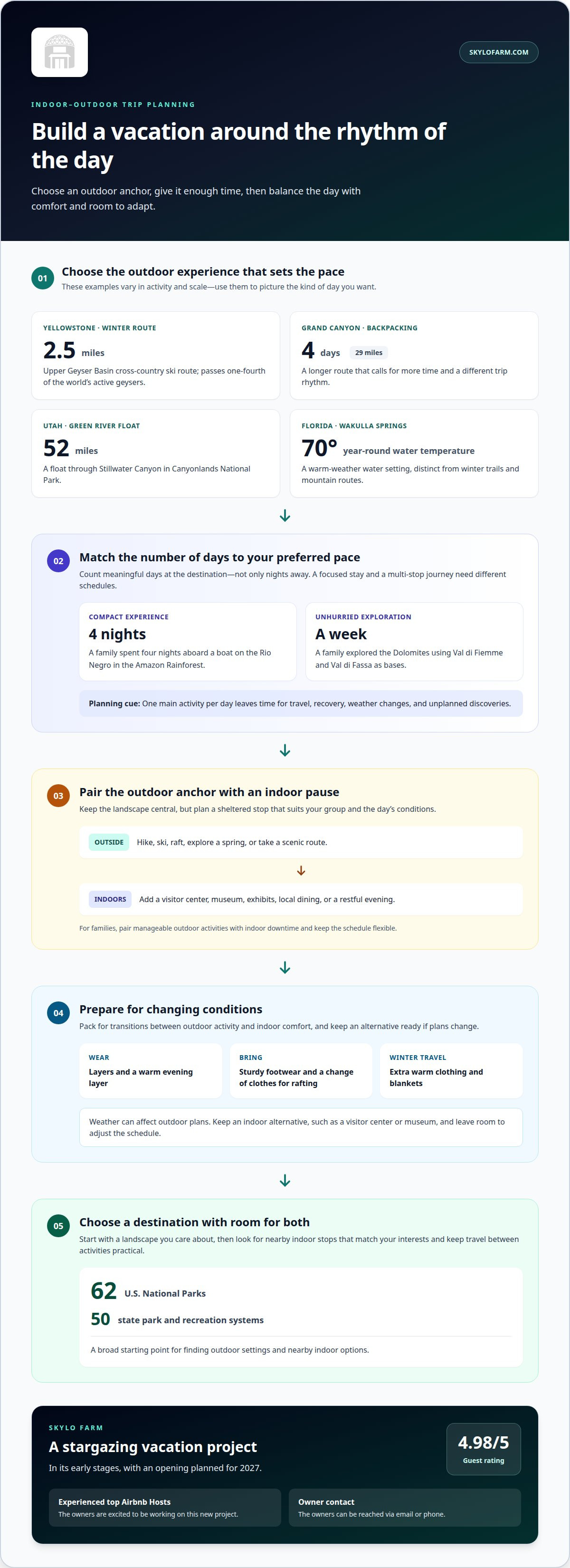
Tour length shapes both the pace and the price of an indoor-outdoor trip. A Grand Canyon backpacking route takes four days and covers 29 miles. A Green River float through Utah’s Canyonlands National Park covers 52 miles through Stillwater Canyon. Compare the starting price with what it includes, such as lodging, transport, meals, equipment, and guided activities. A lower starting price may cover fewer components, so compare like with like.
Indoor-outdoor stays range from cabins and lodge rooms to glamping tents near trails, lakes, or mountain scenery. A geodesic dome or converted structure can offer a sheltered retreat with views of the landscape. Decide whether you want a comfortable base between outdoor activities or a stay that brings the setting into view.
An indoor-outdoor itinerary often puts activities beyond the property at its center, with indoor spaces serving as a place to rest. A traditional resort vacation may focus more on amenities at the property, while hiking, rafting, or island excursions make the surrounding landscape part of the trip.
For a family trip, choose manageable outdoor activities and leave time for indoor downtime. Pair a short nature walk with a museum visit, or balance rafting with a restful evening at a lodge. Plan around children’s energy and keep the schedule flexible.
Pack layers for moving between indoor comfort and outdoor conditions. Bring sturdy footwear for hiking, a warm layer for evenings, and a change of clothes for rafting. For winter travel, the Centers for Disease Control and Prevention (CDC) recommends carrying extra warm clothing and blankets.
Weather can affect outdoor plans, especially in winter or during heat and poor air quality. Keep an indoor alternative, such as a visitor center or museum, and leave room to adjust the schedule. According to the National Park Service, Yosemite Falls, one of the world’s tallest, consists of Upper Yosemite Fall (1,430 feet), the middle cascades (675 feet), and Lower Yosemite Fall (320 feet).
A ship journey from Ushuaia, Argentina, to Antarctica takes a day and a half, so the crossing itself is a substantial part of the itinerary.
2. Trip length recommendations
Count meaningful days at your destination, not just nights away, when choosing trip length. A family exploring the Amazon Rainforest spent four nights aboard a boat on the Rio Negro, building a compact itinerary around one experience. By contrast, a week in the Dolomites gave a family time to explore from bases in Val di Fiemme and Val di Fassa. A focused stay and a multi-base journey need different schedules.
For a short escape, choose one main activity and keep nearby options in reserve. A national park visit might pair a favorite trail with a relaxed evening indoors, while a glacier-viewing trip could center on one scenic route and local interpretation. Avoid squeezing in every excursion: travel between sites and recovery after active days also take time.
For a longer stay, keep one base to reduce transitions, or move between locations if distinct landscapes are central to your plans. In the Dolomites, a family used Val di Fiemme and Val di Fassa as bases during a week of exploration. Give each day one main focus, such as a hike, and leave room for changing weather and unplanned discoveries.
What is the best time of year for an indoor-outdoor vacation? Choose a season that suits your main activity and destination. A winter itinerary may favor snow experiences, while warmer periods can suit hiking and open-air exploration. Include indoor alternatives so the trip still works when conditions change.
Before booking, map out travel days, arrival and departure times, and the full days available. Match the itinerary to your group’s energy, preferred pace, and must-see landscape. A family prioritizing a boat journey may prefer a concentrated stay; travelers seeking several valleys or trails may value a longer visit. The right trip length gives each chosen experience enough time without turning every day into a checklist.
3. What are the best indoor-outdoor vacation destinations in the United States?
The best destination pairs a memorable outdoor setting with indoor options that suit your group’s interests and pace. The United States has 62 National Parks and 50 state park and recreation systems, creating a broad range of landscapes and nearby communities to explore. Rather than choosing by scenery alone, consider how easily you can balance outdoor discovery with museums, visitor centers, or other indoor stops.
Yellowstone suits travelers drawn to geothermal features and winter landscapes. The Upper Geyser Basin cross-country ski route is 2.5 miles long and passes one-fourth of the active geysers in the world. Plan an outdoor outing around that route, then make a visitor center or a nearby indoor stop part of the day’s rhythm. The combination lets the landscape remain central without requiring every activity to happen outside.
In Florida, Wakulla Springs State Park offers a different kind of outdoor experience. Its water stays at 70 degrees year-round, according to the available destination information. Pair time around the springs with indoor activities in the surrounding area, such as exhibits or local dining, to create a change of pace. This destination can appeal to travelers who prefer water and warm-weather scenery over mountain trails or winter recreation.
Use national and state park systems as starting points for a wider search. Choose a landscape first, then find nearby indoor activities that suit your interests. A family might prioritize hands-on learning and easy breaks; a couple could choose scenic walks followed by cultural stops. Keep travel between activities practical, and avoid building a full day around distant locations.
Season matters, too. Yellowstone’s winter route offers a different experience from a warm-weather visit to Wakulla Springs. Compare the outdoor activity you most want with the indoor alternatives near your destination. This simple pairing helps balance time in open landscapes with sheltered activities on a U.S. trip.
4. What activities can you combine on an indoor-outdoor vacation?
Build each day around one outdoor anchor, then add an indoor experience that complements it. In Utah’s Canyonlands National Park, a 52-mile Green River float through Stillwater Canyon can define the adventure. Pair time on the water with a geology exhibit or a relaxed meal indoors, giving the group a change of pace without making the river trip feel like one stop among many.
The Green River trip described included 17 people, ranging in age from four to 80, including eight children. That example shows how a shared outdoor activity can bring different generations together. Add flexible indoor options, such as a local museum or a quiet afternoon at the lodging, so younger travelers and older relatives can enjoy the itinerary at their own rhythm.
On a mountain-focused trip, pair hiking with indoor cultural experiences. Follow a morning trail with an afternoon at a regional history museum, art gallery, or visitor center. This adds context to the landscape and offers a sheltered alternative if conditions change. Keep the trip between the trailhead and indoor stop manageable so the transition doesn’t take over the day.
Winter trips can balance cross-country skiing or snowshoeing with indoor cooking, reading, or a visit to a nearby cultural site. For an evening activity, plan time for night-sky viewing after an active day. Choose activities that contrast in pace: movement outside, then warmth and quiet indoors.
A useful planning sequence is straightforward: choose the main outdoor activity, identify an indoor counterpart, and leave space between them. After rafting, for example, you might visit a museum; after hiking, explore local history or spend the evening observing the stars. This gives an indoor-outdoor itinerary variety while keeping each day coherent.
Changing temperatures and precipitation patterns can bring heat advisories and air-quality warnings that make people stay indoors and avoid outdoor activities, according to the U.S. Government Publishing Office. Treat an indoor counterpart as part of the plan, not just a backup. Keep the day flexible enough to shift away from outdoor activities when advisories or warnings apply, while maintaining a clear rhythm and prioritizing indoor time.
Skylo Farm: Stargazing Vacation
Skylo Farm is developing a stargazing vacation in rural Kansas, where guests can stay in repurposed grain silo homes beneath geodesic domes. Guided telescopes are planned to help guests observe astronomical features, bringing the night sky into focus from this distinctive setting.
The project is still in its early stages and is planned to open in 2027. Its owners are experienced, top Airbnb hosts with a 4.98/5 guest rating, and they’re excited to bring this new project to life.
For questions about the planned retreat, contact Skylo Farm by email or phone.
Shape a Stay Around the Experience You Want
Your next indoor-outdoor vacation can begin with one simple choice: decide what you want to remember most. It might be the quiet of a landscape, the energy of an active day, or the rare pleasure of looking up at a dark, open sky. Let that priority guide the destination, pace, and balance of indoor comfort and time outside.
Then give the itinerary room to breathe. Choose a central experience, leave space for rest, and consider what would make the transition from day to evening feel natural. A thoughtful plan doesn’t need to fill every hour; it should make each part of the stay feel connected.
If a stargazing retreat in Kansas suits the escape you’re imagining, take the next step at your own pace. Contact Skylo Farm to plan your trip, and start shaping a stay beneath the open sky.
Frequently Asked Questions
What does an indoor-outdoor vacation mean?
An indoor-outdoor vacation combines time outside with indoor experiences or comfortable indoor lodging, rather than centering the whole trip on either setting. For example, you might spend the morning exploring a nature trail, then enjoy an indoor cooking class or cultural exhibit later. This balance lets you shape the pace around your interests, comfort, and the conditions during your stay.
How much does an indoor-outdoor vacation typically cost?
There’s no single typical cost for an indoor-outdoor vacation. The total depends on destination, trip length, lodging, transportation, and included activities. A stay with guided excursions and bundled meals differs from one where activities are arranged separately. Compare starting prices by checking what each covers, then account for travel and additional experiences. For a specific trip, the price depends on its details and is provided after a quote request.