
What if a structure built to hold grain could become a place to sleep beneath the stars? A grain silo hotel turns that idea into lodging, but a memorable stay depends on more than an unusual silhouette. The design, amenities, and details of the guest experience matter too. The term may describe a hotel, a vacation rental, or an architectural concept, so it’s worth checking what a specific property actually offers.
This guide explains what to look for in a silo stay, from the building’s layout to the features that can make stargazing part of the experience. Skylo Farm offers luxury, multi-level dome silo homes designed for clear night-sky views. Accommodations include guided telescopes and private outdoor amenities, bringing architecture and stargazing together in a rural retreat.
Use the checklist below to compare properties, clarify what’s included, and decide whether a grain silo stay fits your plans. For details about Skylo Farm’s accommodations, consult its official information rather than relying on assumptions based on photos or the word “hotel.”
Key Takeaways
- A grain silo hotel gives an agricultural structure a new purpose as lodging, but the term doesn’t guarantee a particular type of stay.
- Check the accommodation description for layout, amenities, and guest features that are explicitly included.
- For a stargazing stay, distinguish between a roof or setting designed for sky views and the equipment or guidance the property actually provides.
- Skylo Farm offers multi-level dome silo homes with guided telescopes and private outdoor amenities. Review its official information for details about the stay.
What Is a Grain Silo Hotel, and What Does Repurposing Mean?
A grain silo hotel is lodging created within a grain-storage structure adapted for overnight stays. The phrase describes a type of accommodation, not a standardized hotel classification. The building’s agricultural past and distinctive form set it apart from conventional lodging, while the actual guest experience depends on the property.
This transformation is an example of adaptive reuse, the practice of giving an existing structure a new purpose. A silo can be reimagined as a place to stay while retaining features that connect it to its original use. The design and amenities, however, will vary from one property to another.
How does a grain silo become a place to stay?
At a broad level, conversion means adapting an agricultural structure for overnight accommodation. The approach depends on the building and the intended guest experience, so details from one project shouldn’t be assumed to apply elsewhere. Photos can show a building’s shape or interior style, but a written property description is more useful for confirming how the accommodation is arranged and what guests can use.
Skylo Farm offers multi-level dome silo homes designed for clear night-sky views. Its accommodations include guided telescopes and private outdoor amenities. These specific features help describe the stay, but travelers should still review the property’s current information for details that matter to their own plans.
Why are silo homes attracting design-minded travelers?
The appeal lies in the contrast: an agricultural form associated with storage becomes the setting for a contemporary overnight experience. A silo’s curved profile can make the architecture feel distinct from familiar hotel buildings, and a dome can create a memorable visual connection to the sky.
That character can make a stay stand out, but unusual architecture alone doesn’t establish comfort or suitability. When comparing a grain silo hotel with a more conventional stay, look at practical information such as the room layout, the amenities listed, and the activities the property describes. Decide which features matter most to you, then confirm that they are actually included.
How Adaptive Reuse Balances Silo Character With Guest Comfort
Turning a grain silo into lodging means more than preserving a striking outline. The design has to respond to the structure and the experience the property intends to offer. A well-considered stay makes the building’s agricultural form part of the character while clearly explaining how guests will use the space.
Adaptive reuse is not simply decorating an unchanged storage building; it gives the structure a new purpose through choices shaped by both its character and its future use. Preservation guidance from the U.S. National Park Service describes rehabilitation as a way to accommodate continued or new uses while retaining a property’s historic features, where that guidance applies. Its Standards for Rehabilitation offer useful context, but they shouldn’t be mistaken for a universal checklist for every silo conversion.
Which design questions matter in a silo conversion?
Start with information specific to the property, not assumptions drawn from the word “silo.” Look for a clear description of the layout and the amenities included. If a particular feature will affect your plans, check whether the property states that it is available as part of the stay. A striking image may communicate the design, but it cannot answer every practical question about the accommodation.
It can also help to separate features into two groups: what makes the building distinctive and what you need for a comfortable visit. The first might include the silo form or a dome roof. The second depends on your preferences and the property’s description. This simple comparison can help you avoid choosing a stay based on appearance alone.
How can a distinctive structure feel welcoming?
A thoughtful interior can make the contrast between agricultural character and contemporary hospitality feel intentional. The structure’s original form may remain part of the experience, while the property’s description helps guests understand the layout and included features. Comfort isn’t guaranteed by unusual architecture; it depends on what each individual property offers.
At Skylo Farm, the multi-level dome silo homes are designed for clear night-sky views, with guided telescopes and private outdoor amenities included in the accommodation offering. To understand how those features fit your visit, check the property’s information for the details you need before booking. For updates and accommodation information, visit Skylo Farm project information.
What to Look for When Considering a Grain Silo Stay
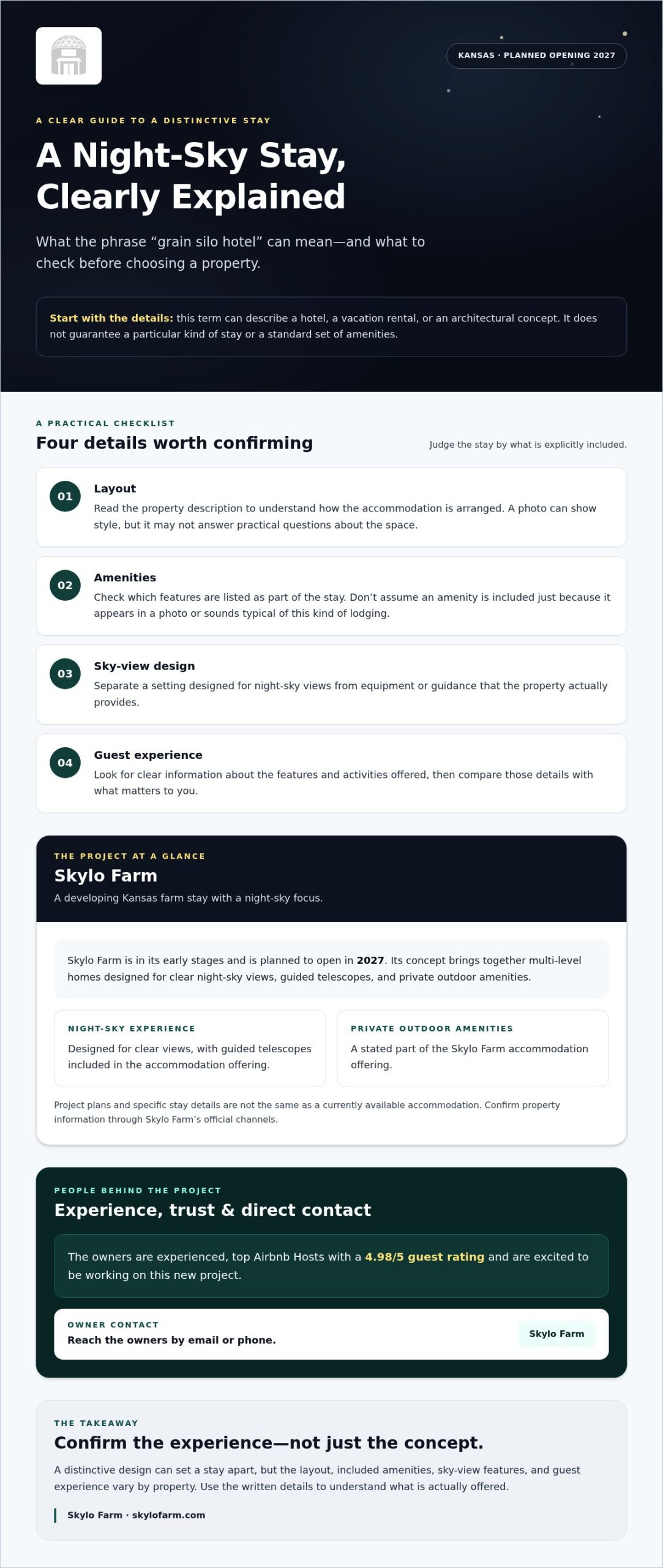
A distinctive silhouette can spark interest, but the practical details determine whether a stay fits your plans. Use this sequence when comparing options:
- Confirm the accommodation and its status. Check that the listing describes a place to stay, not only a design concept or an event space, and verify the information is current.
- Read the property description. Look for specifics about the layout, amenities, and features included with the stay.
- Match the details to your needs. Consider which features are essential to your plans and whether the description answers your questions about them.
- Ask about anything unclear. Contact the property directly if a detail that matters to you is missing or ambiguous.
Confirm the current accommodation details directly with the property before making travel plans. This is especially helpful when a property’s photos and written description leave different impressions. Skylo Farm describes multi-level dome silo homes designed for clear night-sky views, with guided telescopes and private outdoor amenities. Review its official information for current details about the stay.
How can travelers assess comfort and fit?
Review the property’s own description for the specifics that matter to you: how the space is arranged, which amenities are included, and whether the accommodation suits your needs. Don’t infer these details from architectural photography. If something remains unclear, contact the property directly and confirm the answer before you commit.
When comparing two silo stays, use the same questions for each. For example, if you want to spend time observing the night sky, check whether the listing identifies any equipment or guidance. If private outdoor space matters, look for that feature in the accommodation details rather than assuming it comes with every silo stay. Comparing confirmed features makes it easier to judge value for your own priorities without relying on broad labels.
What should visitors know about stargazing?
A dome roof can be part of a stargazing design, but it can’t guarantee what you’ll see. Observing conditions vary, and the presence of a dome shouldn’t be taken as proof of particular equipment, guidance, visibility, or views. Check which stargazing features the property explicitly offers.
When considering an astronomy vacation rental, Skylo Farm’s accommodations include guided telescopes and are designed to provide clear night-sky views. Those features can support a stargazing visit, while the conditions on any particular night remain variable. For current information about the stay, check Skylo Farm project updates.
Skylo Farm: A Grain Silo Stay With a Stargazing Vision
Skylo Farm brings repurposed grain silo homes and stargazing together in a rural retreat. Its multi-level dome silo homes are designed for clear night-sky views, and the accommodations include guided telescopes and private outdoor amenities. These details make the offering distinct from a silo stay that focuses on architecture alone.
What is offered at Skylo Farm?
Skylo Farm offers multi-level dome silo homes designed for clear night-sky views. The accommodations include guided telescopes for guests and private outdoor amenities. These are useful starting points when deciding whether the experience suits your interests. For specific questions about the layout or which amenities apply to a particular accommodation, consult the current property information.
When considering a stargazing stay, distinguish between the setting and the equipment or services provided. A design intended to offer sky views is one part of the experience; guided telescopes are a separate, explicitly described feature. Check the details of the accommodation you’re considering so you know what to expect.
How can readers learn more about the stay?
Consult Skylo Farm’s own current accommodation information for details, and confirm anything that matters to your plans directly with the property. A clear description can help you understand the design and included amenities, while direct questions can resolve details that aren’t covered on the page.
For a broader sense of the project’s vision, readers can also look for the related article, “Skylo Farm: A Sanctuary Where Prairie Meets the Infinite.” The practical details of the accommodation, including its guided telescopes and private outdoor amenities, provide a concrete starting point when considering the stay.
Follow the Vision as Skylo Farm Takes Shape
A grain silo hotel is more than an arresting architectural idea. The guest experience depends on how the structure is adapted and how clearly the property explains its accommodations. Before choosing any silo stay, check the current description and confirm the features that matter to you. Stargazing amenities can make a visit more distinctive, but the night sky itself can’t be guaranteed.
Skylo Farm offers multi-level dome silo homes designed for clear night-sky views, with guided telescopes and private outdoor amenities. If those features match what you’re looking for, review the official site for current accommodation information and details about the stay.
To learn more about the experience, explore Skylo Farm’s updates.
Frequently Asked Questions
What is a grain silo hotel?
A grain silo hotel is lodging created within a grain-storage structure adapted for overnight stays. The phrase describes the building’s former use and distinctive architecture, not a standard hotel classification. Individual properties can differ in design and guest experience, so check each property’s description for confirmed details rather than assuming every silo stay offers the same layout, amenities, or services.
Can a grain silo be converted into a comfortable home or guest stay?
Yes, a grain silo can be adapted for a home or guest stay, but the approach depends on the existing structure, its intended use, and the planned guest experience. The idea is to give an agricultural building a new purpose while considering how people will use the space. A silo’s unusual shape alone doesn’t confirm that a conversion is comfortable or suitable for every guest.
What should I check before choosing a grain silo accommodation?
Read the current property description for specific information about the layout and included amenities. Check which features are explicitly offered rather than inferring them from photos. If stargazing matters to your plans, look for details about any equipment or guidance provided, and remember that sky conditions can vary. Contact the property directly if you need clarification.
Does Skylo Farm offer stargazing features?
Yes. Skylo Farm’s multi-level dome silo homes are designed for clear night-sky views, and the accommodations include guided telescopes and private outdoor amenities. Review the property’s current information for details about the stay and the features included with a particular accommodation.
What makes a silo stay different from a conventional hotel?
A silo stay makes the building’s agricultural form part of the accommodation experience. The layout, design, and amenities vary by property, so the term doesn’t tell you everything about what’s included. Compare the specific description with your priorities, such as distinctive architecture, outdoor amenities, or stargazing features, before deciding whether it’s the right fit.