
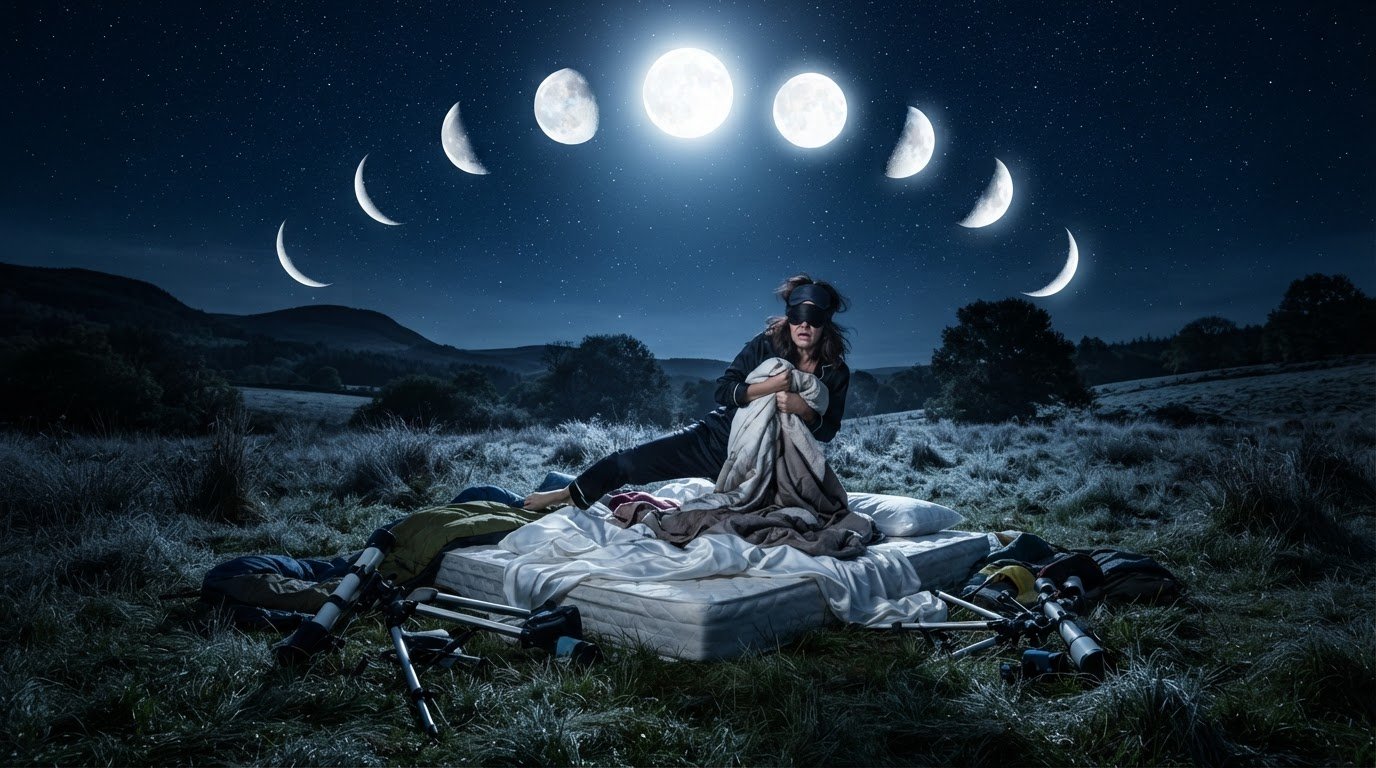
What if the Moon helped you decide what to look for in the sky? A moon cycle retreat can follow the lunar phases, creating a stargazing experience that changes from one night to the next. Around the new moon, darker skies can make faint objects easier to observe. A full moon brightens the night and can outshine them. Choosing dates around the view you want is a practical first step.
The setting matters as much as the timing. Skylo Farm is developing a circle of 10 grain silo homes topped with geodesic domes for stargazing, surrounded by open countryside, with an opening planned for 2027. This guide explains how lunar phases affect night-sky viewing, how to choose dates and activities around your interests, and what to consider in a distinctive, comfortable retreat. The owners are experienced Airbnb Hosts with a 4.98/5 guest rating. They are excited about the project and can be reached by email or phone.
Key Takeaways
- Decide whether you mean a retreat aligned with lunar phases or one centered on personal-cycle practices, then plan around the experience you want.
- Choose a moon cycle retreat date according to your sky-viewing priorities. Lunar illumination affects how much contrast the night sky offers for faint objects.
- Use a current lunar calendar to check phase dates before arranging your stay, and check the weather closer to your trip.
- Skylo Farm is developing dome-roof silo homes for stargazing, with experienced hosts behind the project and an opening planned for 2027.
What Does a Moon Cycle Retreat Mean for a Night-Sky Getaway?
“Moon cycle” can refer to the Moon’s changing phases or to practices that follow a person’s menstrual cycle. Here, a moon cycle retreat means a getaway shaped around observing the Moon and night sky, not a cycle-based wellness program. The focus is the view overhead: the Moon’s visible appearance shifts over the lunar month, and each phase changes the amount of natural light in the sky.
Lunar phases and personal cycles are different ideas
Lunar phases describe how much of the Moon’s sunlit side appears visible from Earth as the Moon moves through its orbit. New moon, crescent, quarter, gibbous, and full moon are stages in that pattern. The term “cycle” can also describe personal practices related to menstrual-cycle stages. These are distinct ideas. For an overview of the astronomical timing, see the different meanings of a lunar month.
What makes a moon-focused retreat feel restorative?
A slower pace can make a moon-focused getaway appealing: a quiet setting, room to pause, and time to notice how the sky changes after dusk. Instead of filling the evening with scheduled activities, let observation guide it. You might watch the Moon’s changing outline or scan the surrounding sky. Its light becomes part of the experience, changing the night’s appearance from phase to phase.
Clear expectations help, too. A stargazing getaway offers a setting for looking up, but it is not the same as a guided meditation, therapy, or wellness program. The central experience is time with the night sky, approached at a pace that leaves room for curiosity and quiet attention.
How the Moon’s Phases Change a Stargazing Retreat
The Moon changes the night sky both as an object to observe and as a source of light. Sunlight reflects off the Moon, and the changing portion visible from Earth affects how bright the sky appears. That difference can shape what stands out during a moon cycle retreat, particularly if you hope to see dimmer objects.
New moon, crescent, and quarter phases
Near the new moon, less lunar light reaches the night sky. Darker conditions can provide more contrast for faint stars and other dim objects, although visibility also depends on clouds, atmospheric conditions, light around the viewing area, and the timing of your observation. A crescent or quarter moon offers a different balance: the Moon’s shape is visible, while the sky may still appear darker than it does under a bright full moon.
Choose a phase based on what you want to see. If your priority is scanning for faint points of light, dates near the new moon may suit you. If you want to observe the Moon itself, a crescent’s fine edge or a quarter phase’s visible boundary can be a compelling focus.
Full moon and the changing view
A full moon commands attention, illuminating its surface and giving the sky a distinct presence. Its brightness can make some faint stars harder to pick out, so a full-moon night may be less suited to observing dim objects. Choose according to your priority: lunar detail and a brilliantly lit sky, or darker conditions that may reveal more subtle points of light.
The Moon is also connected to natural rhythms beyond astronomy. NOAA explains the moon’s influence on natural cycles through its discussion of tides. For a stay designed around watching the sky, explore Skylo Farm’s stargazing stay as you consider which lunar view you’d most like to experience.
How to Plan a Moon Cycle Retreat Around Your Night-Sky Priorities
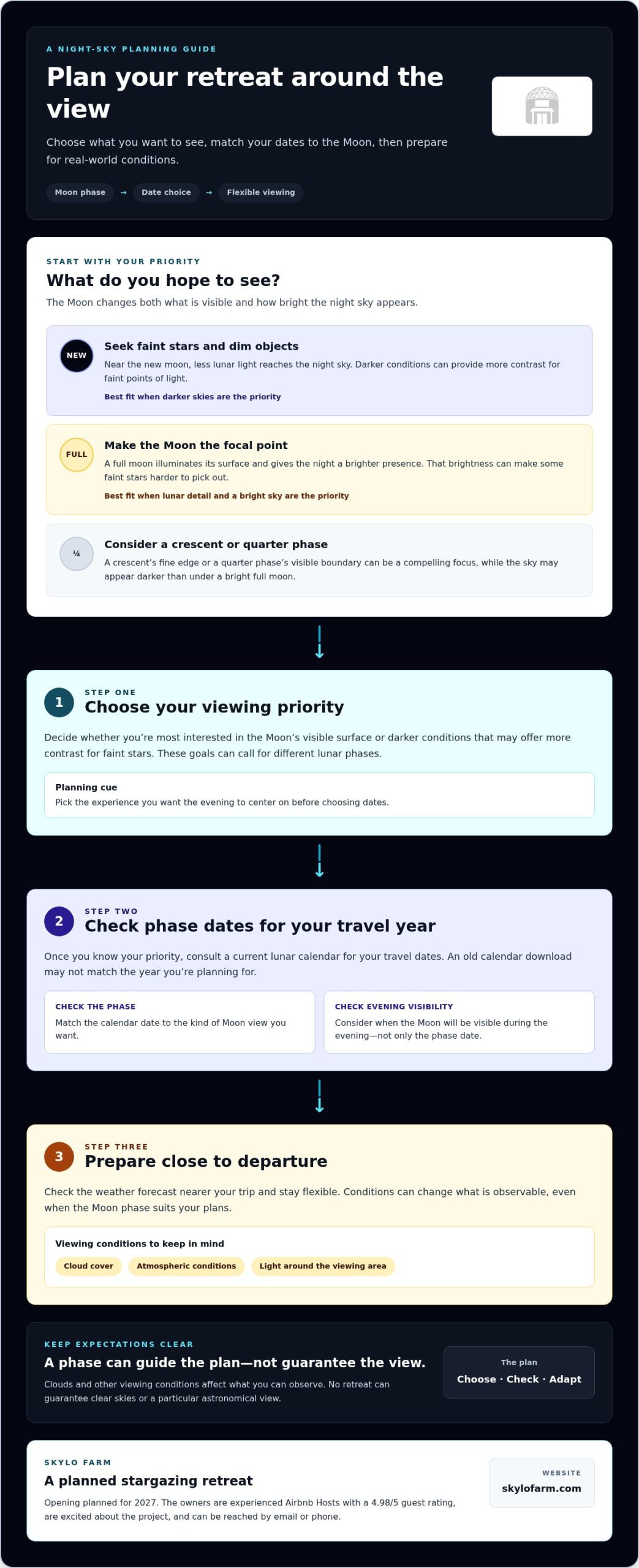
Plan a moon cycle retreat by starting with the view you hope to experience, then working backward to choose dates and prepare for the evening. This simple sequence can help:
- Choose your priority. Decide whether you’re most interested in the Moon’s visible surface or darker conditions that may offer more contrast for faint stars. These goals can call for different lunar phases, so identify what you’d like the evening to center on.
- Check the phase dates. Consult a current lunar calendar for your travel dates once you know your priority. An old calendar download may not match the year you’re planning for. Check the Moon’s phase and consider when it will be visible during the evening, not just the date assigned to the phase.
- Prepare close to departure. Check the weather forecast nearer your trip and stay flexible. Cloud cover and other viewing conditions affect what’s observable. No retreat can guarantee clear skies or a particular astronomical view.
Choose the view you most want to experience
If lunar detail is your priority, a brighter phase can make the Moon a striking focal point. For a darker sky and a chance to seek out faint stars, consider dates nearer the new moon. Also think about how the accommodation supports your plans, including the setting and access to a telescope. This guide to choosing an astronomy vacation rental covers considerations for a stay designed around the night sky.
Prepare for a deliberate evening outdoors
Build flexibility into your plans instead of treating one date as a promise of perfect viewing. Pair your lunar-calendar check with a weather check close to your trip, and consider the practical details of a Kansas stargazing getaway. As you set your night-sky priorities, explore Skylo Farm’s planned retreat, a stargazing stay with an opening planned for 2027.
How Skylo Farm’s Planned Stargazing Stay Fits a Moon Cycle Retreat
Skylo Farm is developing a stay centered on observing the night sky. Its distinctive setting can suit a moon cycle retreat, where the lunar phase helps shape what you hope to notice during an evening outdoors. The project brings together a considered place to stay and the opportunity to look up, without promising a particular view.
A distinctive setting for observing the lunar month
Skylo Farm is a circle of 10 repurposed grain silo homes with geodesic domes for roofs, surrounded by Kansas farmland. The planned stays include guided telescopes for exploring the sky and private outdoor amenities for spending time outside. The contrast between the unusual built environment and the open night sky creates a distinctive backdrop, while each lunar phase offers a different view to consider.
The combination of repurposed structures and celestial observation gives the project a character beyond a conventional overnight stay. Guests can plan around their interest in the Moon or stars, then let the actual conditions of the evening guide what they observe.
A trusted project with experienced hosts
The owners are experienced, top Airbnb Hosts with a 4.98/5 guest rating, and they are excited to be working on this new project. Their hosting experience brings a human point of connection to Skylo Farm as it develops. The retreat is planned around a distinctive stay shaped by stargazing, with an opening planned for 2027.
The owners can be reached by email or phone. Follow Skylo Farm’s updates to see the project progress toward opening and learn more about the planned stargazing stay.
Let the Next Clear Night Shape Your Plans
A night beneath the open sky doesn’t need to follow a perfect script. Let your lunar-calendar choice guide the mood, then leave room for the unexpected: a shift in cloud cover, a different view of the Moon, or a quiet moment that makes you pause. That balance of intention and flexibility can make a moon cycle retreat feel personal without turning the experience into a checklist.
As you imagine your next stargazing stay, consider what kind of setting would make it easier to slow down and look up. Skylo Farm is taking shape around that invitation, bringing distinctive architecture and night-sky observation together in a planned retreat. Its opening is planned for 2027, and following the project’s progress is a natural next step for anyone curious about the stay.
Explore Skylo Farm updates and follow the project as it moves toward opening. For questions, the owners can be reached by email or phone. Start planning your next memorable evening under the stars with a little curiosity today.
Frequently Asked Questions
What is a moon cycle retreat?
A moon cycle retreat is a stay organized around observing lunar phases and the night sky, rather than a prescribed wellness program. You might choose dates to focus on the Moon or seek darker viewing conditions, then let the evening unfold according to the setting. Since the phrase can mean different things, be clear about which kind of experience you want.
Is a full moon good for stargazing?
It can be, if you want the Moon to be a central feature of the night. Its bright presence offers an engaging subject, though its light can reduce the contrast of faint stars and other dim objects. If those objects are your priority, a darker phase may suit you better. The right choice depends on what you hope to observe.
Can you see stars during a full moon?
Yes, stars can still be visible during a full moon, but dimmer ones may be harder to distinguish against the brighter sky. Cloud cover and other viewing conditions also affect what appears overhead. Set your expectations accordingly: you may see some stars while giving the Moon itself your attention, rather than expecting the darkest possible view.
How do I choose the best moon phase for a retreat?
Start by deciding whether you’d rather observe a bright Moon or seek darker conditions for faint stars. Then check a current lunar calendar for your travel dates and look at weather forecasts closer to departure. Treat the phase as one planning factor, not a promise of clear skies or a particular view. Flexibility can help you enjoy the evening whatever appears overhead.
When will Skylo Farm open?
Skylo Farm is in development, with an opening planned for 2027. The project brings together distinctive grain silo homes with geodesic domes and a focus on observing the night sky. Visit the official Skylo Farm updates page for information as the project takes shape.