
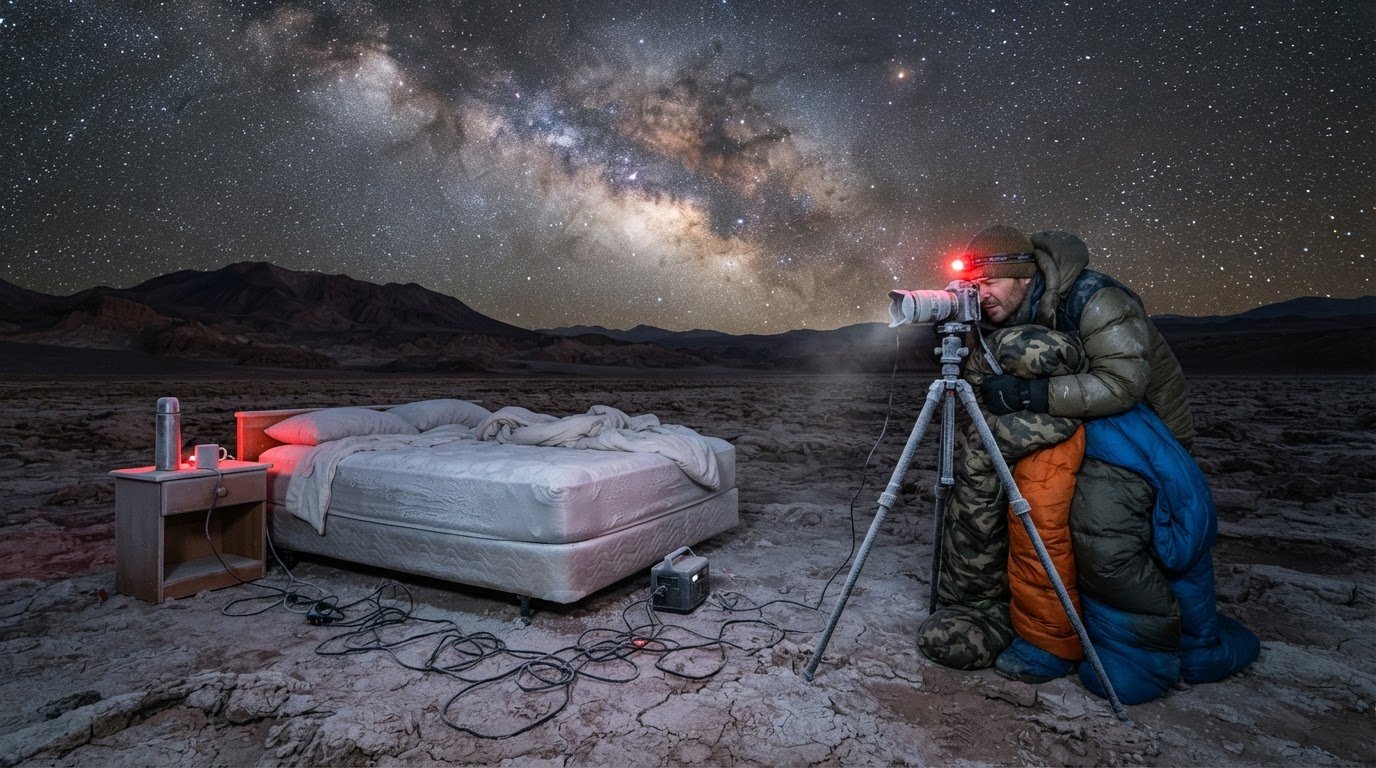
A good astrophotography vacation rental gives you room to prepare, set up outdoors, and adapt when the night sky doesn’t cooperate. Clear weather and ideal conditions can’t be guaranteed, but a stable place for your camera, convenient outdoor access, and a flexible plan can make the experience rewarding. When choosing a stay for night-sky photography, look beyond the view: privacy and practical ways to prepare and pack up after dark matter, too.
Skylo Farm is in development as a circle of 10 grain silo homes with geodesic dome roofs, designed for stargazing and surrounded by farmland. The retreat is planned to open in 2027. Guided telescopes and private outdoor amenities are part of the planned stay. The owners are experienced, top Airbnb Hosts with a 4.98/5 guest rating, and can be reached by email or phone. In this guide, learn how to choose a stargazing-friendly stay, prepare camera gear, and plan around moonlight and weather, so you can make the most of clear nights without expecting every evening to go to plan.
Key Takeaways
- Choose an astrophotography vacation rental for practical night-sky conditions, including outdoor access and a stable place to set up your gear.
- Build a flexible plan: pick a sky target, check the moon and forecast, prepare your equipment, and adapt when you arrive.
- Use a steady tripod and a deliberate sequence of focusing, composing, and testing. Adjust exposure to your camera, lens, subject, and conditions.
- Discover how Skylo Farm’s planned circle of 10 dome-roof silo homes is being designed for stargazing, with an opening planned for 2027.
What to look for in an astrophotography vacation rental
A striking view can make a property memorable, but it doesn’t automatically make night photography comfortable or practical. An astrophotography-friendly stay offers convenient outdoor access, a stable place to set a tripod, and enough room to prepare equipment without rushing. Think through the whole session: carrying gear outside, composing in darkness, and returning indoors when conditions change. These details matter more than a label or a promise of perfect skies.
Which rental features make a night shoot more manageable?
Look for an outdoor area with a firm, steady surface where a tripod can stand securely. Easy access to your accommodation makes it simpler to adjust equipment or take a break. Privacy and a comfortable place to spend time outside can also make a long session more relaxed. A telescope and a photography camera serve different purposes: a telescope helps you observe celestial objects, while a camera and lens capture an image. For background on the different approaches and equipment, see What is Astrophotography?
How do dark skies and moonlight affect your plans?
Nearby artificial lights can make faint stars harder to see and reduce contrast in photographs. Moonlight is another planning factor. It can brighten the sky, which may suit some compositions but make faint details less distinct. A rural setting or a particular moon phase doesn’t guarantee a clear or dark sky. Weather, local light sources, and changing conditions all shape what you’ll be able to photograph.
Before travelling, check a current weather forecast and the lunar phase for your dates. Consider whether your intended subject benefits from a darker sky or whether moonlight could add atmosphere to the scene. An astrophotography vacation rental can make the session more comfortable, while a flexible plan leaves room to enjoy the sky even if your photographs turn out differently than expected.
How to plan an astrophotography vacation rental trip
A little preparation lets you spend less of the night troubleshooting and more time observing the sky. Before booking an astrophotography vacation rental, decide what you hope to see and whether photography, visual observing, or a mix of both is your priority. Choose a realistic first subject, such as the Moon, a bright planet, or a star field. Then review the stay’s setting and amenities without treating them as a promise of dark or clear skies.
What should you decide before booking a night-sky stay?
Build a simple sequence: select a target, check the forecast and lunar phase, prepare your gear, then adapt on site. A darker sky can help with some subjects. DarkSky International offers background on light pollution and protecting the night sky. Leave room in your schedule for darkness, setup, and rest rather than planning around a supposedly perfect shooting window. The guide The Infinite Gallery: Astronomy Vacation Essentials can also help shape your wider trip preparations.
What should you pack for a first astrophotography session?
Choose gear that suits your camera and goals. A basic checklist includes:
- A camera and suitable lens for your intended subject.
- A sturdy tripod to keep the camera stable.
- Charged batteries and enough storage space for your images.
- Warm layers and a dimmable light source for comfort and careful setup.
Before departure, practise the camera controls you’ll need, including focusing and changing exposure settings. A quick rehearsal at home can make setup in the dark feel far less unfamiliar.
Skylo Farm is being developed as a stargazing retreat and is planned to open in 2027. Explore Skylo Farm’s planned stargazing stay as you consider your trip.
How to photograph the night sky during your stay
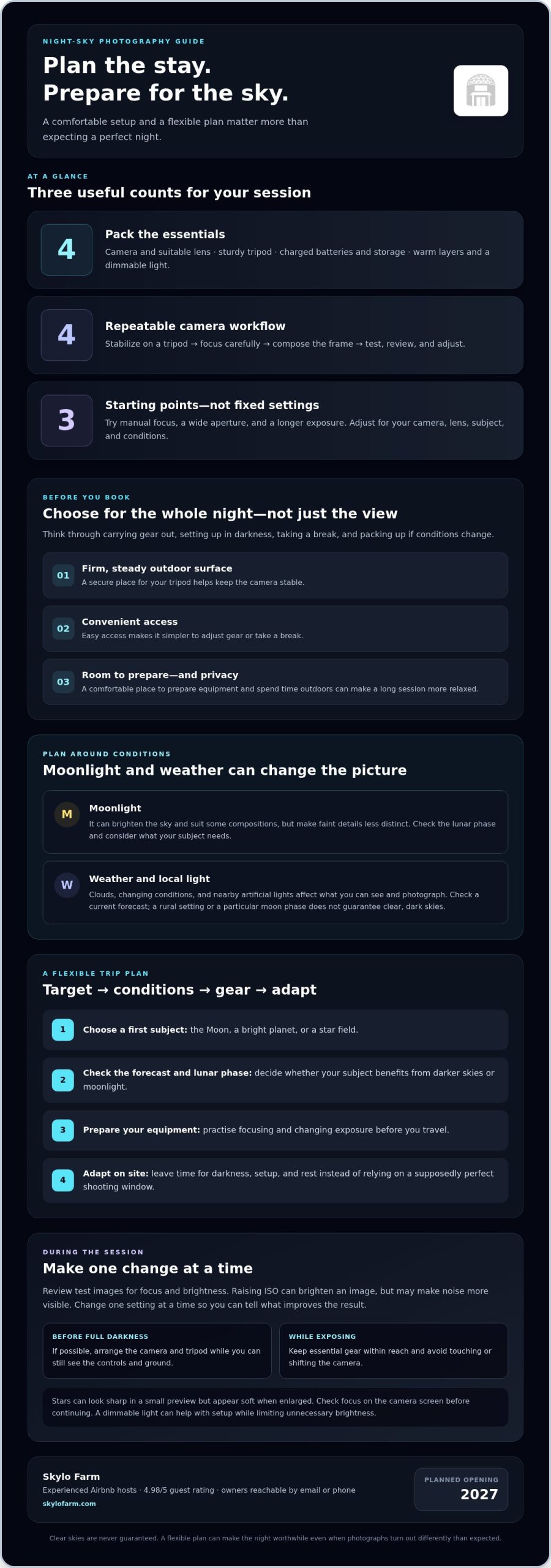
Use a repeatable workflow, not a rigid recipe. Secure the camera on a tripod, focus carefully, compose the frame, take a test image, then review and adjust. Check focus on the camera screen before continuing. Stars that look sharp in a small preview may appear soft when enlarged. If stray light affects the scene, NASA’s guide to how to find dark skies for stargazing offers useful context on observing conditions.
What beginner camera settings should you try first?
Start with manual focus, a wide aperture, and a longer exposure, then treat each as a starting point for experimentation rather than a fixed setting. The right exposure depends on your camera, lens, subject, and the conditions overhead. Raising ISO can brighten an image, but it can also make image noise more visible. Take a test shot, inspect its focus and brightness, and change one setting at a time so you can tell what improves the result.
How can you make the session more comfortable?
If possible, arrange your camera and tripod before full darkness, while you can still see the controls and ground clearly. Keep essential gear within reach, and avoid touching or shifting the camera during an exposure. Small movements can soften detail. A dimmable light can help with setup while limiting unnecessary brightness around you.
Let the session unfold at an unhurried pace. Pause to look up and observe the sky, then make another attempt when you’re ready. An astrophotography vacation rental can frame a memorable night even if clouds, focus, or exposure don’t cooperate. The experience needn’t hinge on one perfect image. Skylo Farm is a planned stargazing retreat, with an opening planned for 2027. Explore Skylo Farm’s planned stargazing stay.
How Skylo Farm brings a stargazing stay and photography together
An astrophotography vacation rental can make a night feel more intentional when its setting is designed around looking up. Skylo Farm is in development as a circle of 10 grain silo homes with geodesic dome roofs, surrounded by farmland and planned for stargazing. The retreat is planned to open in 2027. Its distinctive architecture brings the familiar forms of grain silos together with the geometric lines of dome roofs, creating a setting shaped around the night sky without promising particular weather or photographic results.
What makes the Skylo Farm concept distinct for stargazers?
Guided telescopes are part of the planned stay, supporting visual observing and helping guests explore celestial objects through a telescope. A telescope and a photography camera have different purposes, so photographers can bring their own camera setup and also enjoy time spent observing. Private outdoor amenities are also planned, adding space to experience the landscape beneath the open sky. For more context, explore Dark Sky Places: Plan a Stargazing Getaway and The Skylo Farm retreat concept.
How can guests feel confident about the people behind the retreat?
Skylo Farm is being developed by experienced, top Airbnb Hosts with a 4.98/5 guest rating. Their hosting experience brings a thoughtful foundation to a new project, and the owners can be reached directly by email or phone. They’re excited to be working on this retreat, bringing together a distinctive design and a shared appreciation for stargazing.
To learn more about the plans for this future stay, explore Skylo Farm’s planned retreat concept.
Plan a night beneath a sky worth remembering
A rewarding astrophotography vacation rental stay begins with practical choices: a comfortable outdoor setup, a simple gear plan, and room to adapt when moonlight or weather shifts your expectations. Once outside, stabilize your camera, focus carefully, take a test image, and adjust settings to suit your equipment and the sky. The experience can still be meaningful when the photographs aren’t exactly what you imagined.
Skylo Farm is in development as a planned circle of 10 grain silo homes with geodesic dome roofs, guided telescopes, and private outdoor amenities, surrounded by farmland. It’s planned to open in 2027. The owners are experienced, top Airbnb Hosts with a 4.98/5 guest rating, and guests can reach them by email or phone.
Discover the vision for this future stargazing retreat and explore the Skylo Farm stargazing retreat. With thoughtful preparation and an open mind, your next clear night can offer more than a photograph: it can be a chance to slow down and meet the cosmos on its own terms.
Frequently Asked Questions
What makes a vacation rental suitable for astrophotography?
Look for practical features that make a night outside comfortable: convenient outdoor access, room to set up a tripod, and a stable surface for photography. The surrounding light environment and weather also affect what you can see and capture. No accommodation can guarantee clear skies or ideal photographs, so review the stay details and plan flexibly around current conditions.
Can beginners take astrophotography photos at a vacation rental?
Yes. Beginners can start with a camera, a suitable lens, and a stable tripod. Practise focusing and using manual controls before your trip, then learn from test images and small adjustments to settings. You don’t need professional results for the session to feel worthwhile. Taking time to observe, experiment, and enjoy the night sky is part of the experience.
What equipment should I bring for astrophotography on vacation?
A useful starting kit includes a camera, a lens suited to your subject, a sturdy tripod, charged batteries, and enough storage for your images. The right setup depends on your camera and photography goals. Pack comfortable layers and a dimmable light source for outdoor comfort and careful setup. Plan to bring your own camera equipment.
How do I plan an astrophotography session around the Moon?
Choose what you hope to photograph, then check the lunar phase and expected weather for your travel dates. Moonlight changes the appearance of the night sky and may affect which subjects are practical to photograph. Build flexibility into your schedule, since forecasts can change and don’t promise clear conditions. Adjust your plans to the sky you actually encounter.
Does Skylo Farm provide equipment for astrophotography?
Skylo Farm is planned to include guided telescopes for observing astronomical features, along with private outdoor amenities. Telescopes support visual observation, while astrophotography uses a camera setup, so plan to bring your own camera equipment. The retreat is in development and planned to open in 2027. Its owners are experienced, top Airbnb Hosts with a 4.98/5 guest rating and can be reached by email or phone.